


The United Nations Office for Project Services (UNOPS)
Clearing the way for peace and sustainable development
Across conflict-affected countries like South Sudan and the Central African Republic (CAR), hidden explosive hazards can block humanitarian access, restrict daily movement, and threaten lives long after active conflict ends. In support of UNMAS, UNOPS provides the operational, technical, and logistical support needed to clear contaminated land, build local capacities, and help communities safely rebuild their lives.
RESTORING SAFETY AND LIVELIHOODS IN SOUTH SUDAN
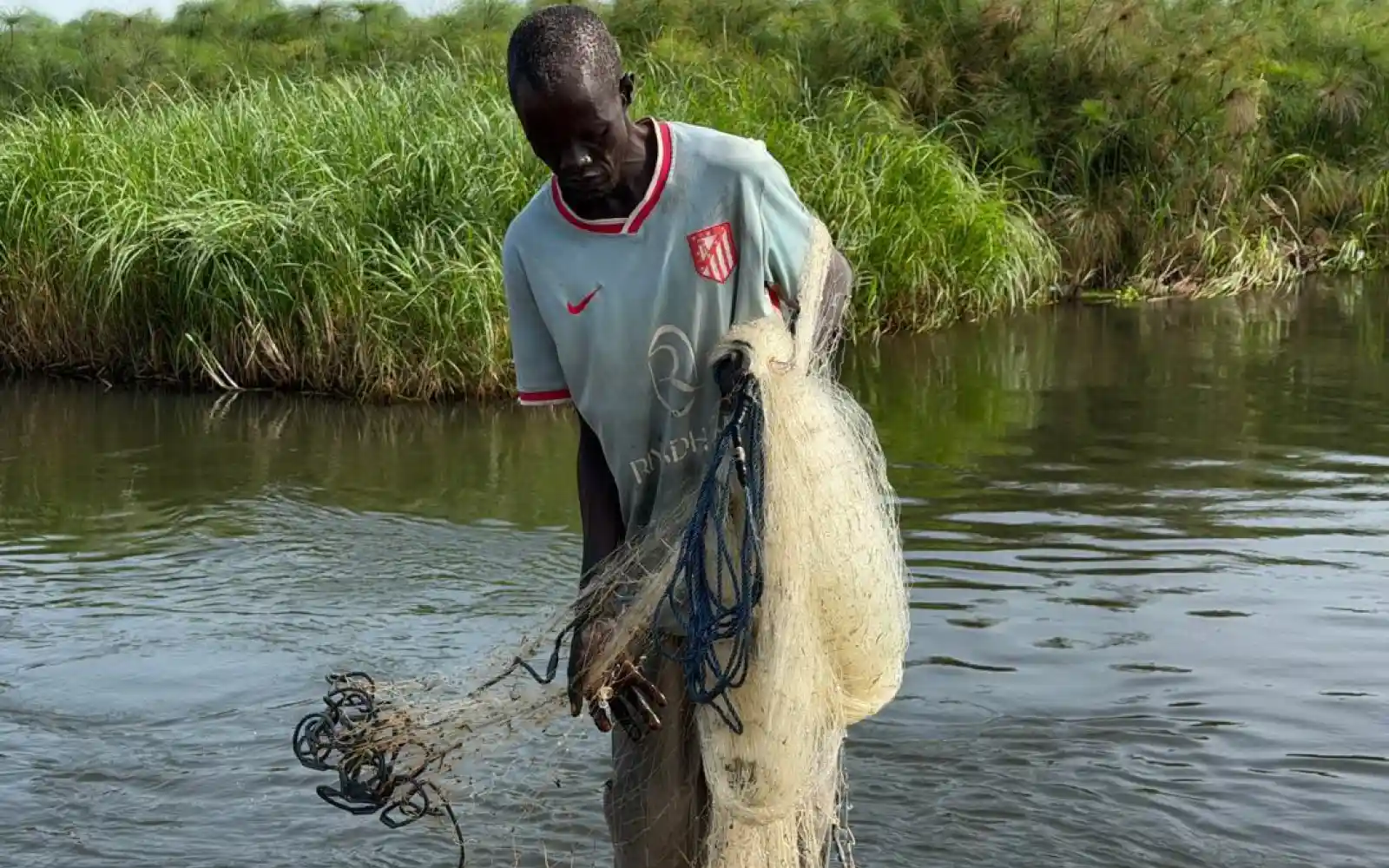
For years, residents of Bilinyang village in Mangala Payam lived with the daily threat of explosive remnants of war, unable to farm or move freely. The danger turned tragic in 2024 when a young boy was killed after unknowingly stepping on an anti-personnel mine. The loss devastated the community and underscored the urgent need for action.
Because of its proximity to homes and farmland, UNMAS prioritized the area for clearance. UNOPS supported UNMAS, as the Mine Action Service section of the UN Mission in South Sudan (UNMISS), through technical investigations and contamination surveys.
Manual and mechanical clearance teams worked systematically across the site for nearly five years. By March 2026, teams had cleared over 850,000 square metres of land, destroying 77 anti-tank and anti-vehicle mines, eight anti-personnel mines, and 28 other explosive remnants of war ‒ eliminating a threat that had endangered countless lives.
Today, the cleared land hosts a new resettlement site for internally displaced families, unlocking land for agriculture and economic recovery.
For many years, this land was unsafe and could not be fully used by residents. With the area now being cleared, our people will be able to safely return to farming activities […] which will greatly support livelihoods and food production in the village.
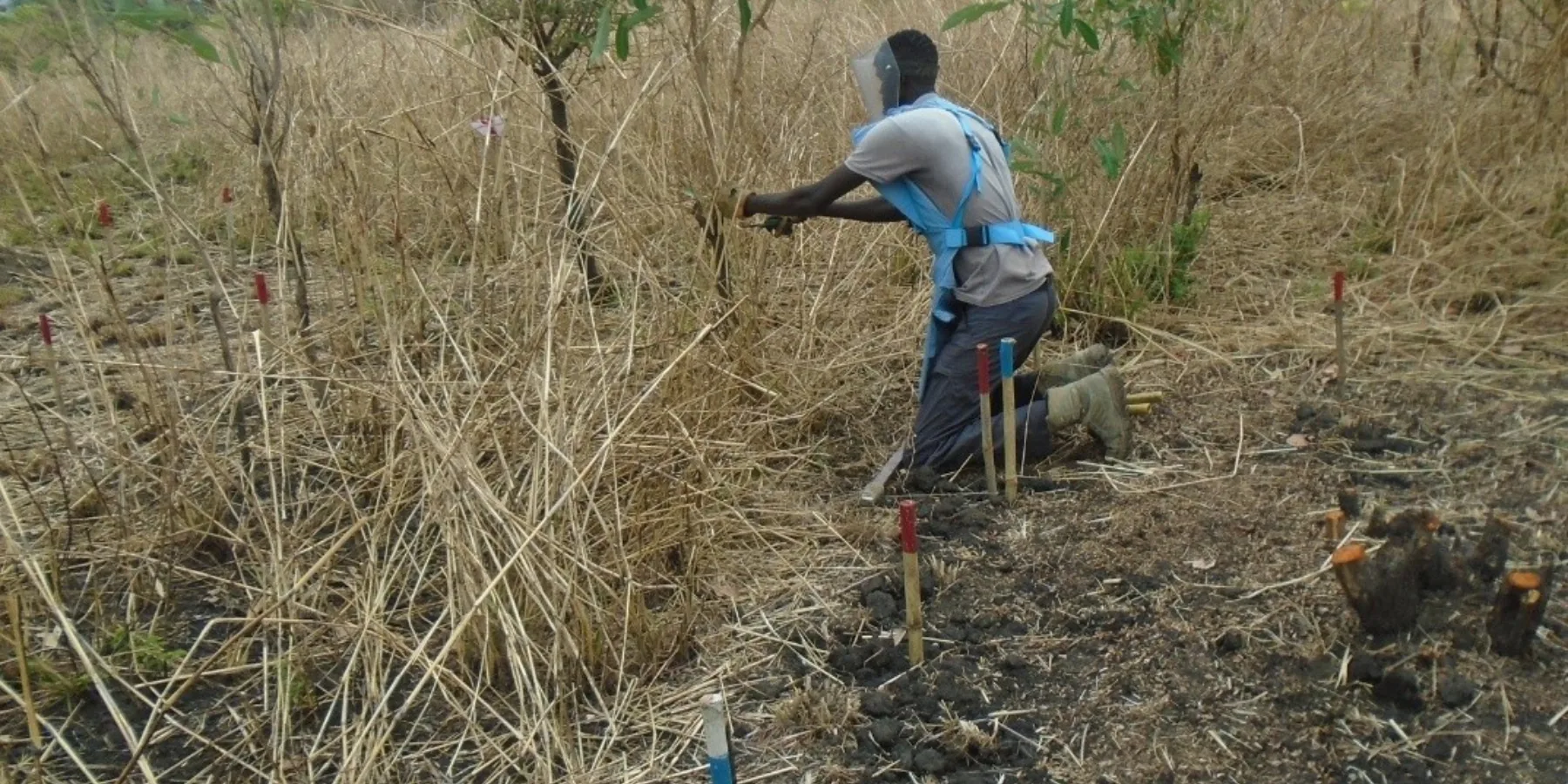
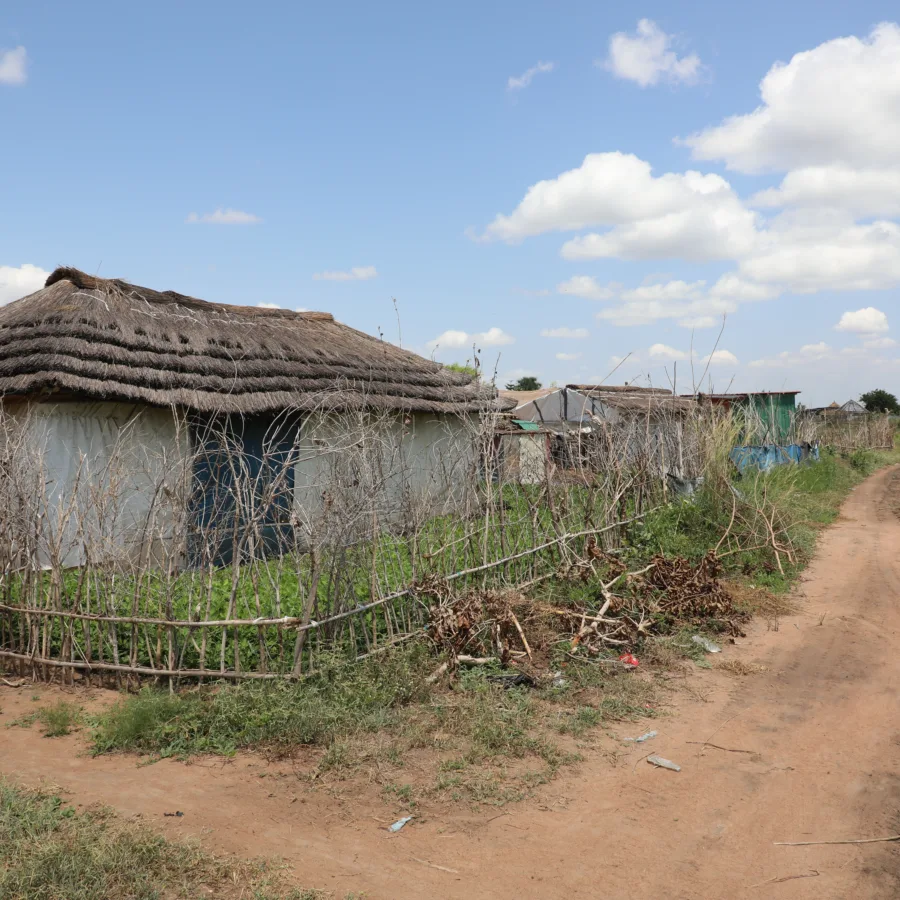
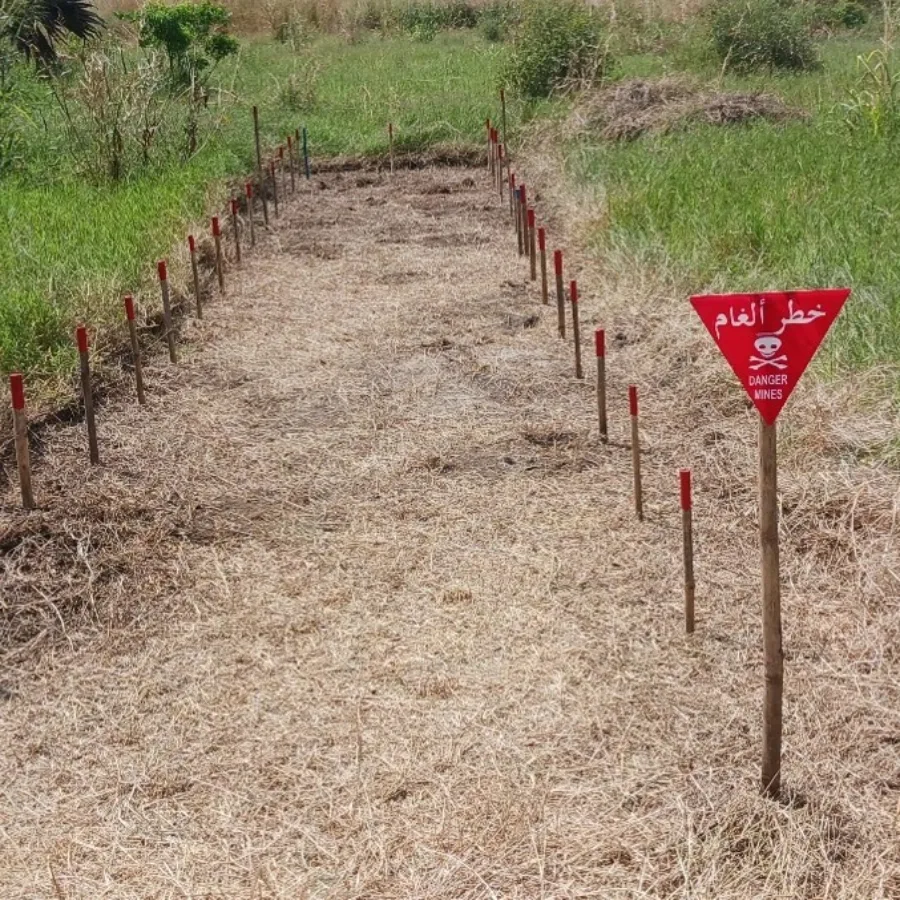
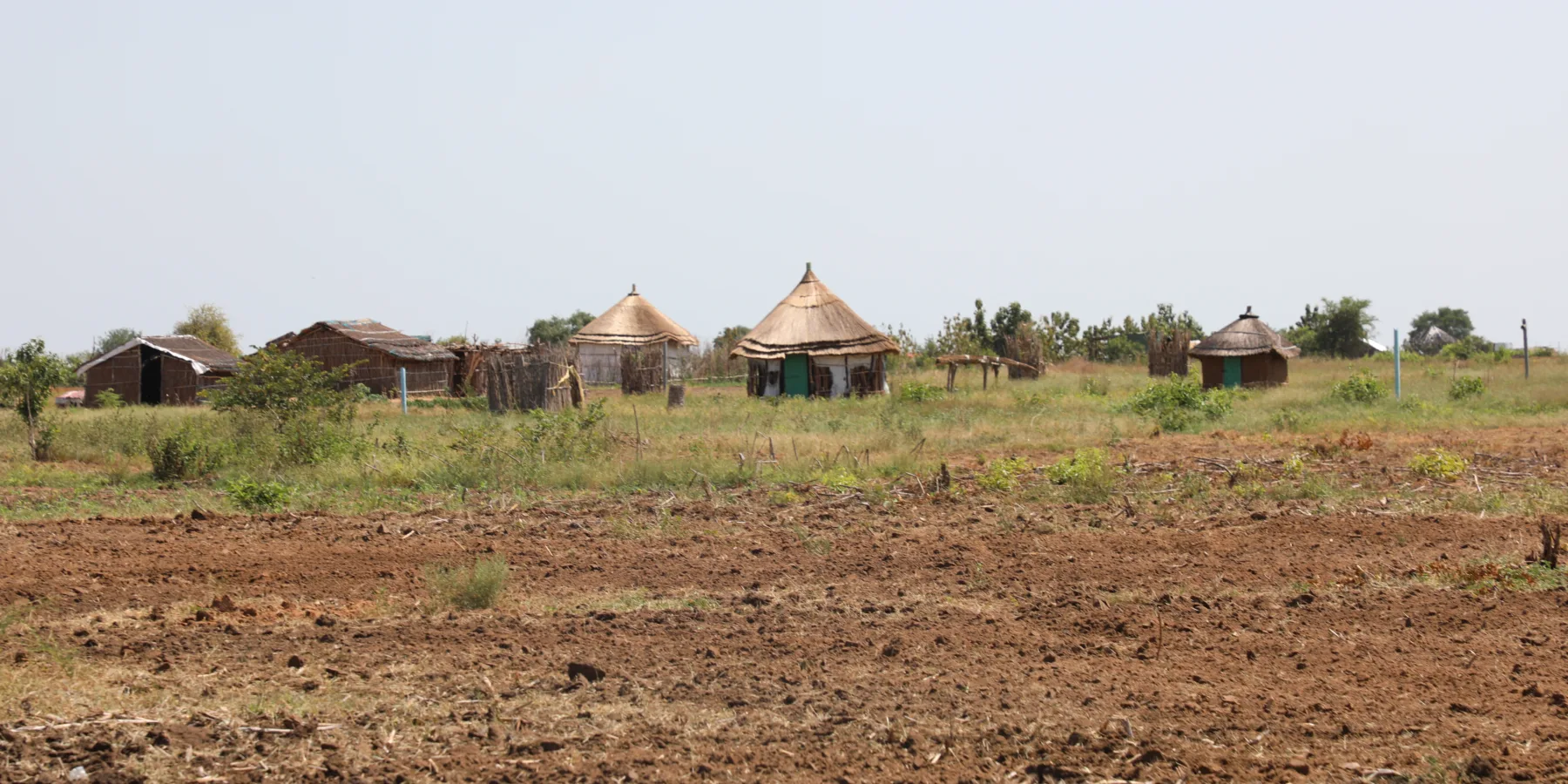
For the people of Bilinyang, mine action means children can play safely, farmers can cultivate their land once again, and communities can rebuild without fear.
"Clearing explosive hazards in Bilinyang demonstrates the tangible impact of mine action in improving safety, restoring humanitarian access and enabling displaced communities to recover and rebuild with confidence,” says Zehrudin Sukanovic, Chief of the Mine Action Programme for UNMAS in South Sudan.
“This work [is] a critical, life-saving, and non-optional enabler of the UNMISS mandate, supporting the protection of civilians and creating safer conditions for stability and recovery," he adds.
BUILDING LOCAL OWNERSHIP IN THE CENTRAL AFRICAN REPUBLIC (CAR)
Decades of conflict in CAR have left a complex explosive legacy. Since 2020, contamination has escalated across central and western regions, with the emergence of landmines and Improvised Explosive Devices (IEDs) impeding the movement of peacekeepers, government officials, and aid workers.
To create lasting solutions, UNOPS supports UNMAS and the UN Multidimensional Integrated Stabilization Mission in the Central African Republic (MINUSCA), prioritizing national capacity building and institutional sustainability.
Since 2014, this work has supported the National Commission for the Fight Against the Proliferation of Small Arms and Light Weapons (NATCOM-SALW).
“The partnership contributed to the operationalization of our national action plan, improving our readiness to respond effectively to security challenges while strengthening national ownership,” explains Colonel Gaetan Saramandji, Executive Secretary of the NATCOM-SALW.
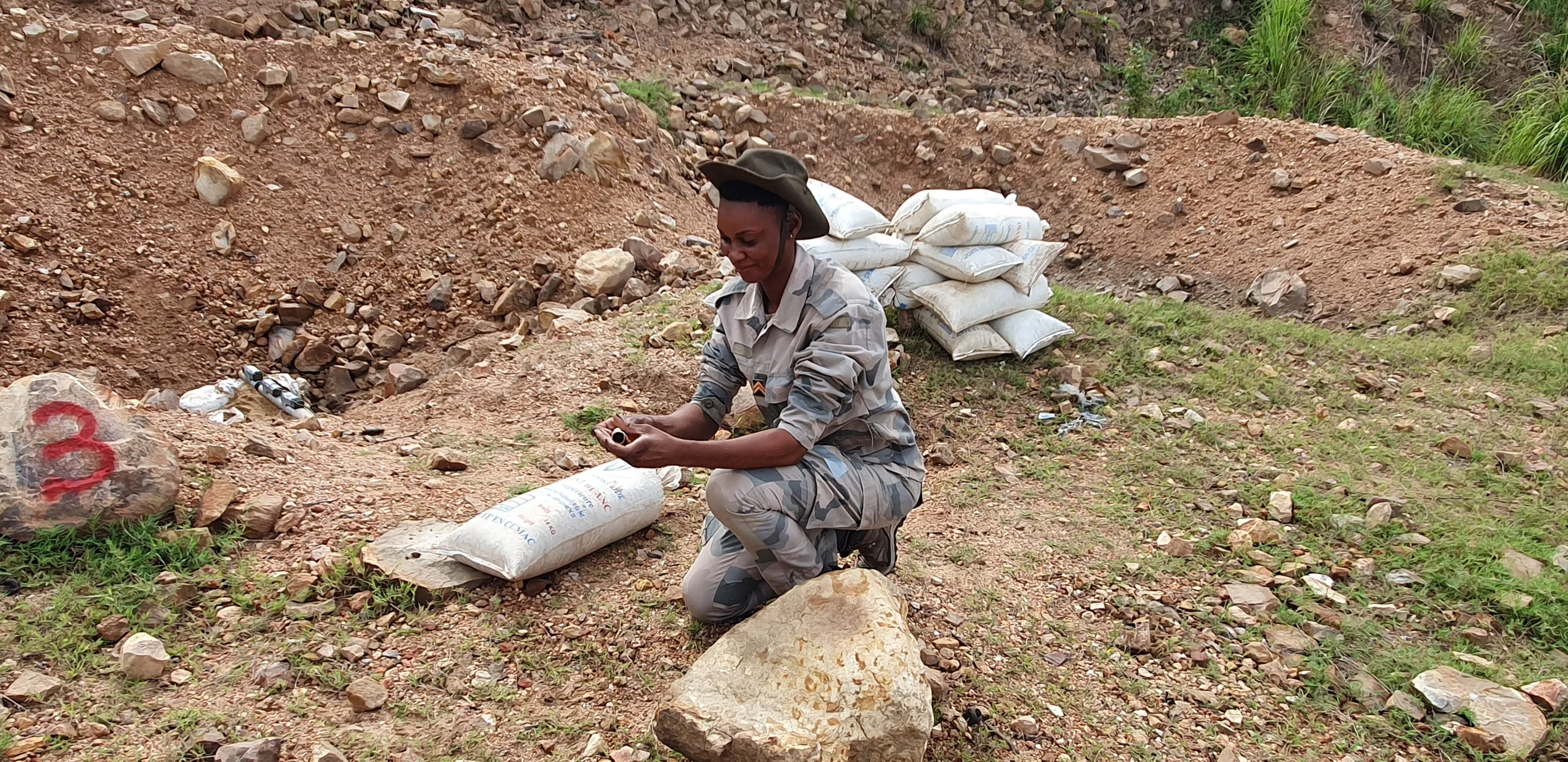
Following the creation of the National Mine Action Authority (NMAA) in September 2025, UNOPS and UNMAS have expanded advisory support and operational training for government personnel. The partnership is also breaking gender barriers in technical field roles.
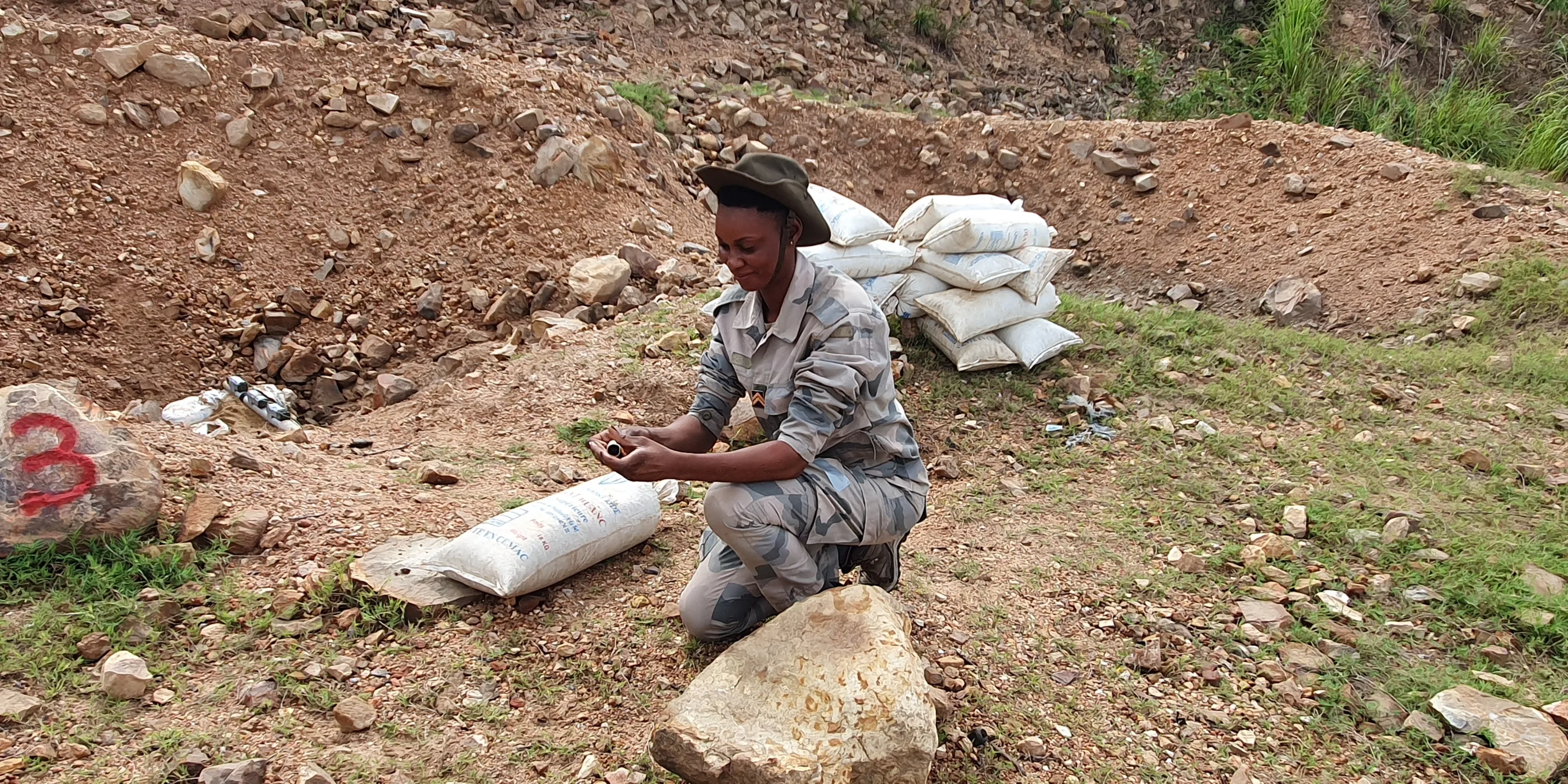
“Building sustainable national capacity also means ensuring that women have opportunities to participate across all areas of mine action, including in highly technical roles where they have traditionally been underrepresented,” highlights Dorothy Du, UNOPS Head of Project Unit and UNMAS Acting Chief of the Mine Action Programme. “Seeing women complete advanced technical training in-country but also at regional training facilities and take on these roles is an important step towards building a more inclusive and representative national mine action capacity.”
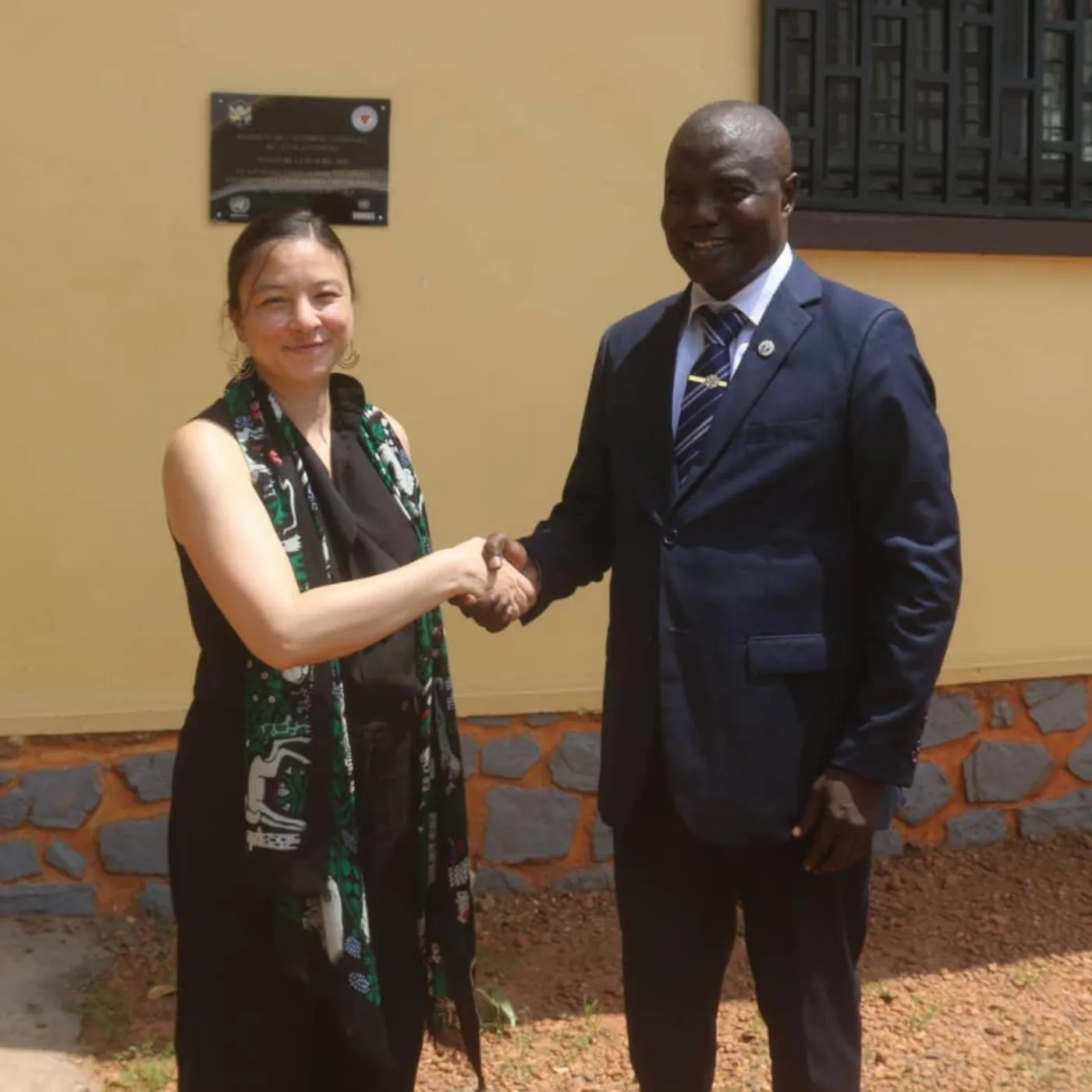
UNMAS experts work side by side with the National Mine Action Authority daily to build strong national capacities – an essential foundation for ensuring the effectiveness, sustainability, and national ownership of mine action. Ultimately, investing in national capacity is an investment in peace, resilience, and sustainable development.
Lieutenant Colonel Edgar Ghazaka - Coordinator, National Mine Action Authority
A PERSONAL MISSION FOR RECOVERY
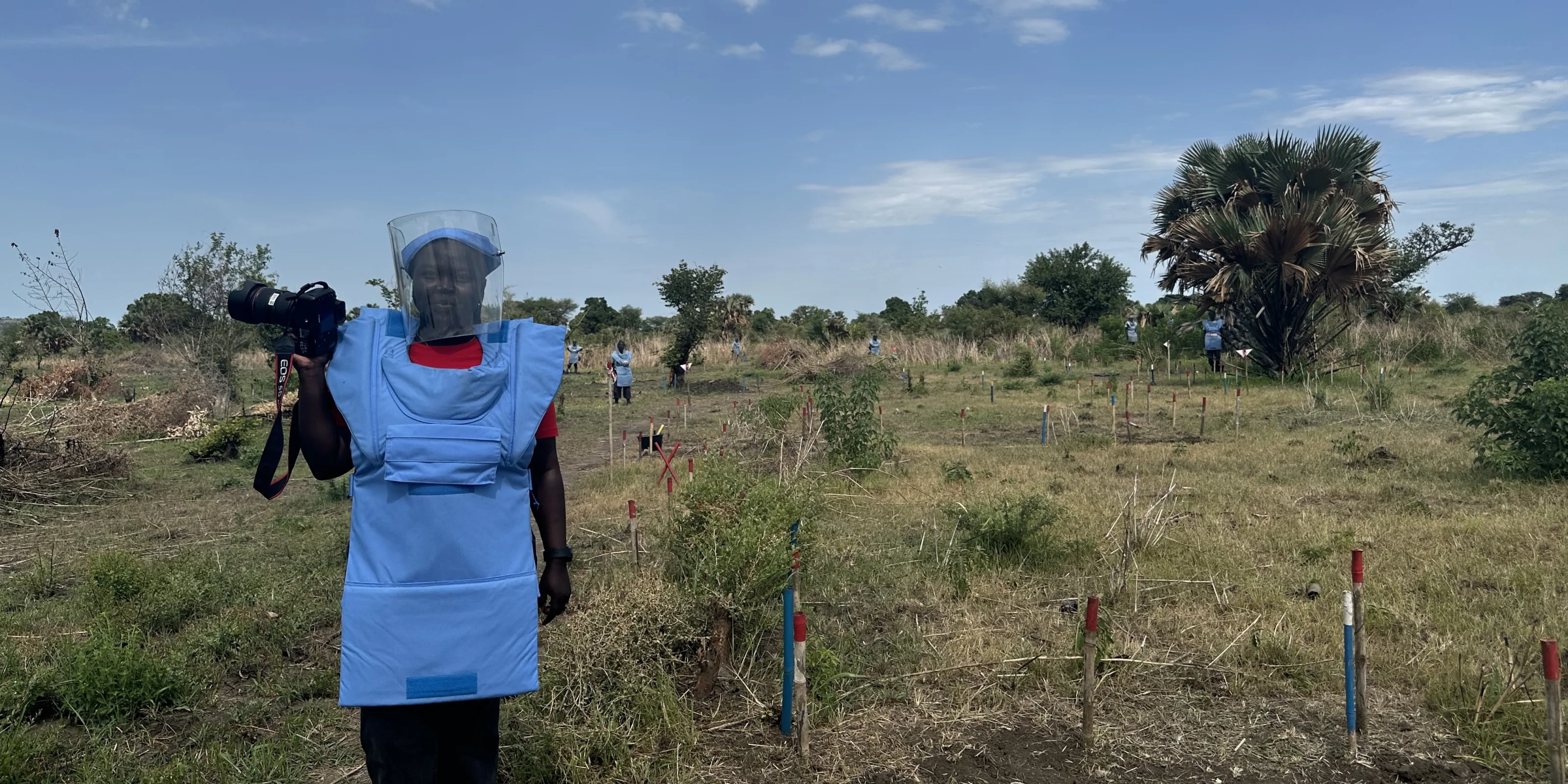
For many team members, the work is deeply personal. Achom Atem Garang, a UNOPS Public Information and Programme Officer working in support of the UNMAS South Sudan programme, has spent two years documenting the impact in her country.
“Mine action is not only about clearing explosive items, but about helping communities rebuild,” says Achom.
“Having a relative affected by explosive ordnance constantly reminds me that behind every statistic is a human story. My role allows me to support work that saves lives while sharing stories of resilience and recovery across South Sudan. For me, this is part of contributing to the rebuilding of my nation.”
FOUNDATIONS FOR PEACE
From South Sudan to the Central African Republic and beyond, operational mine action remains a prerequisite for peace ‒ clearing the path for families to return home and for communities to rebuild safely.
"UNOPS supports UNMAS and UN peacekeeping missions across the globe so that communities can safely return to their land and humanitarian partners can safely reach those in need," says Amir Omeragic, Director of UNOPS Peace and Security Cluster.
"Together, we are helping create the conditions for long-term recovery and reconstruction."
Global Goal we are supporting through this initiative: