



The United Nations Office for Project Services (UNOPS)
Déclaration du Directeur exécutif de l’UNOPS sur l’Initiative ONU80 dans le cadre du débat consacré aux questions communes du Conseil d’administration
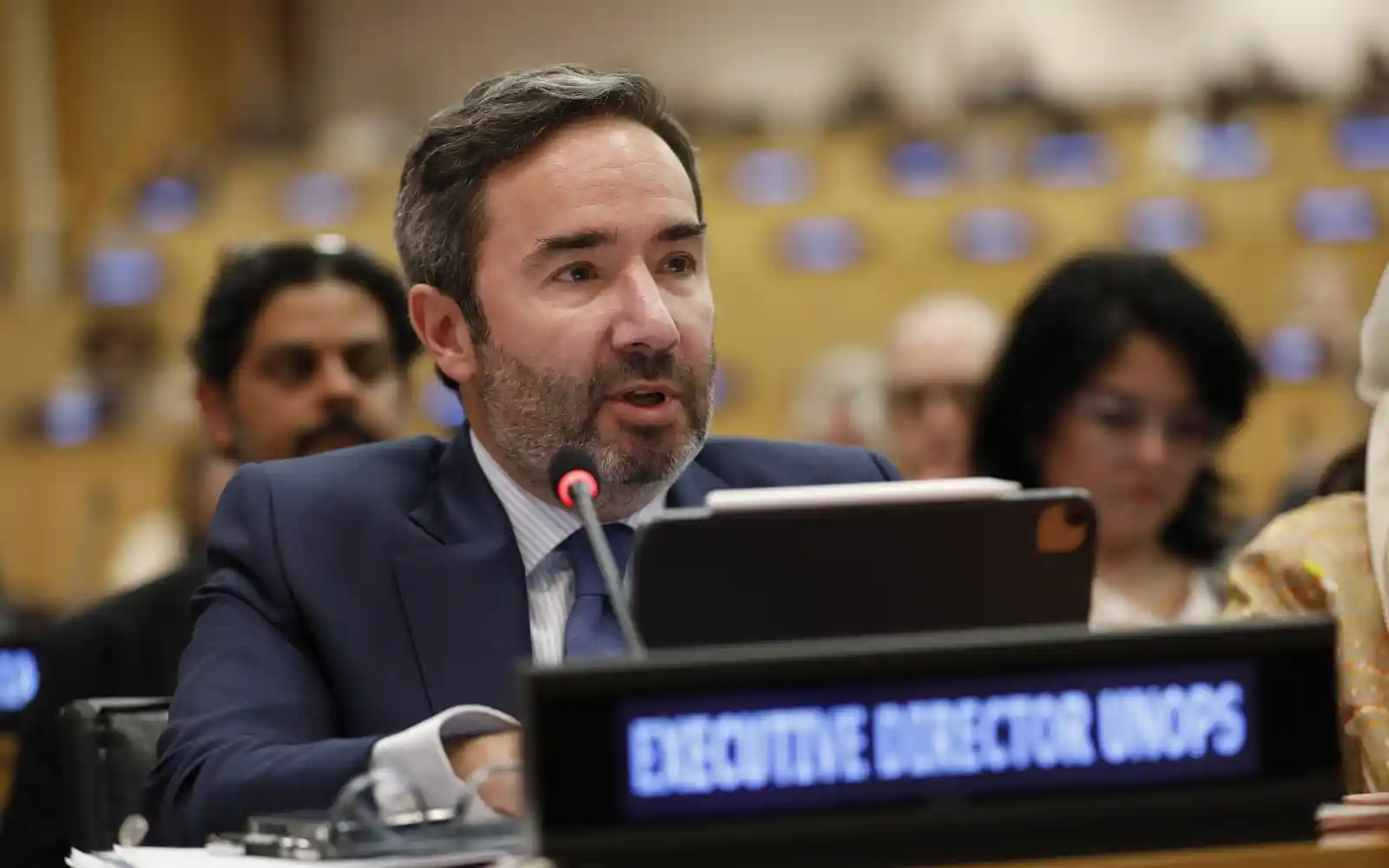
Déclaration de Jorge Moreira da Silva, Secrétaire général adjoint des Nations Unies et Directeur exécutif de l’UNOPS, sur l’Initiative ONU80 dans le cadre du débat consacré aux questions communes du Conseil d’administration du 2 février 2026. (en anglais)
[Check against delivery]
Séance du 2 février (interprétation en français disponible) : https://webtv.un.org/en/asset/...
Conseil d’administration du PNUD/FNUAP/UNOPS
— UNOPS en français (@UNOPS_fr) February 3, 2026
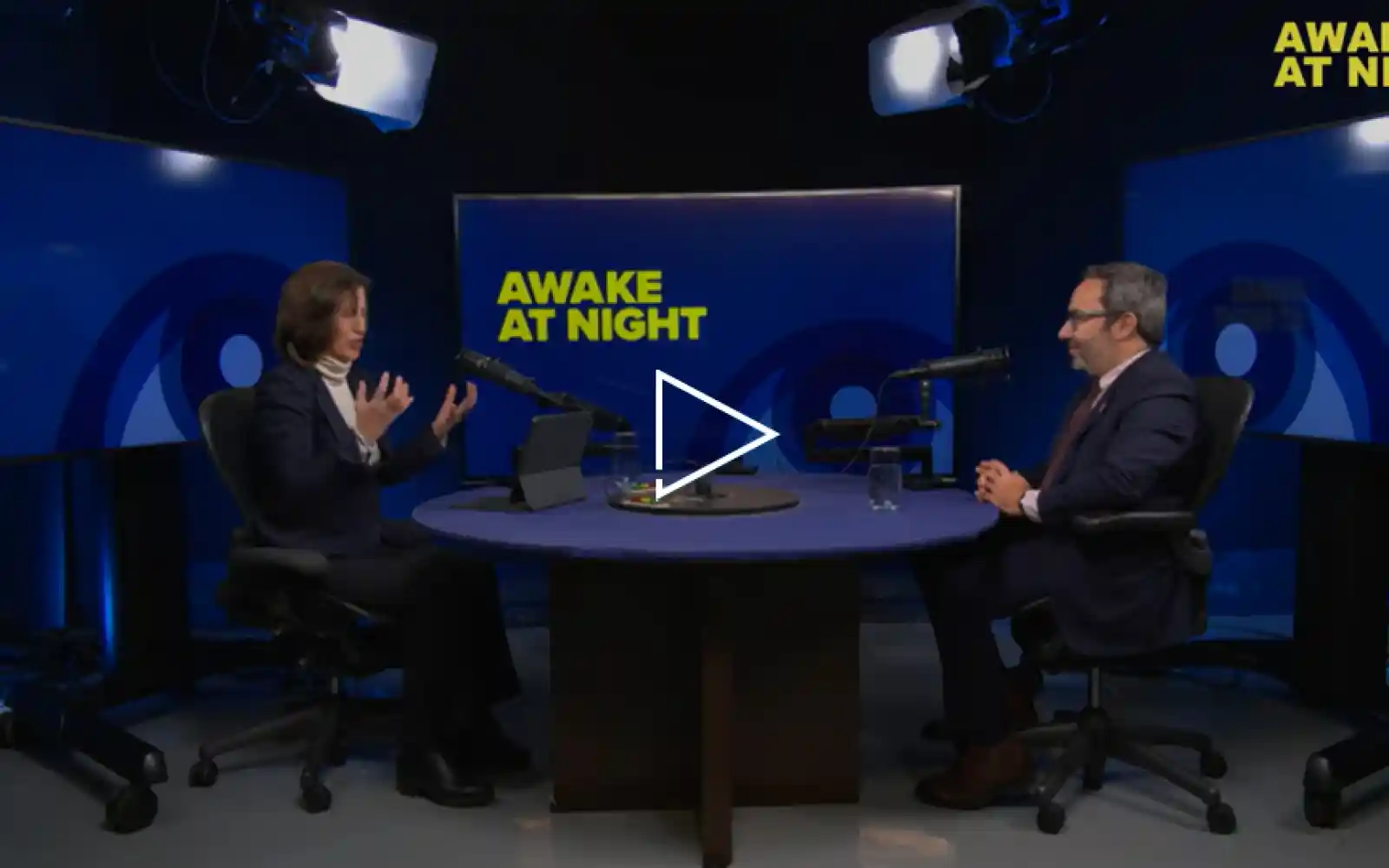
En présence d’@AminaJMohammed, @UNOPS_Chief a souligné le potentiel de l’Initiative #ONU80 pour créer une organisation plus agile et réactive pour le développement durable.
Lisez sa déclaration: https://t.co/PfOzIRvNQy | #unopsEB https://t.co/DnmAPVvV4C
Mr. President,
Distinguished Members of the Executive Board,
Let me jump directly to the key question: is our current model for development working and is it fit for purpose?
The short answer is: while it has played a crucial role for more than six decades, now it is outdated, and full of contradictions. The need to rethink and improve this model is long overdue.
This requires a new international development architecture that overcomes fragmentation and inconsistency and can simultaneously bring together all sources of finance, all public, private and civil society actors, and address decision-making, rule-setting, accountability, enforcement and learning. But in addition to a new architecture it also requires new institutions able to boost sustainable development coherently and at scale, overcoming the misalignment or at least fragmentation of policy, finance and delivery.
Never has there been a stronger need for a unified, coordinated, and scaled-up response.
Funds are being cut. People’s lives and livelihoods are hanging by the thread.
Budgets are being allocated for defence while response to development needs is falling in the cracks.
Meanwhile, conflicts continue around the world, erasing decades-long development gains. Respect for human rights and global values is slipping,
with impunity. And the climate crisis is wreaking havoc, hitting hardest the most vulnerable, and those with the least capacities to adapt and respond.
Yet, huge gaps remain between policy, financing and implementation. Development and climate funds continue to go to contexts where it’s easiest to work, rather than those that need it most. And even when funds and policies are in place, implementation lags.
It is time for bold actions and decisions. The UN80 process is an excellent opportunity to build and improve on what works.
I welcome and I am deeply committed to support the Secretary-General’s initiative to assess the benefits of merging UNDP and UNOPS, which could create a stronger engine for sustainable development in UN Country Teams, with greater scale. I am glad to embark on this process with the UNDP Administrator under the coordination of the Deputy Secretary-General.
This new entity can accelerate progress towards sustainable development, driving impact at scale for people and countries, across the social, economic, and environmental dimensions in support of Member States’ aspirations and goals. This approach empowers people and institutions, mobilizes partnerships, and fosters innovative solutions, to ensure that development gains are sustainable and responsive to national priorities. And it will support better alignment of policy, finance and implementation behind sustainable development, and reduce fragmentation.
The recent technical overview prepared by MOPAN may shed some light on a number of aspects for Member States’ consideration in the context of the merger of the 2 organisations, particularly their respective operating models and organizational cultures, and their compatibility.
Both organisations have a strong footprint on the ground, a significant volume of delivery and a total alignment on the SDG agenda. But the two organizations also have different mandates and different business models.
That’s why, before we develop the pros and cons of the merger, we have focused on data collection and assessment of current configuration of the two organisations. This allows Member States to better understand the potential complementarity, overlapping and synergies to deliver at scale.
Therefore, in the potential merger we must ensure that the mandates and the distinct added value of each organisation are preserved and maximised.
The question is: what is UNOPS added value to be preserved in the new entity?
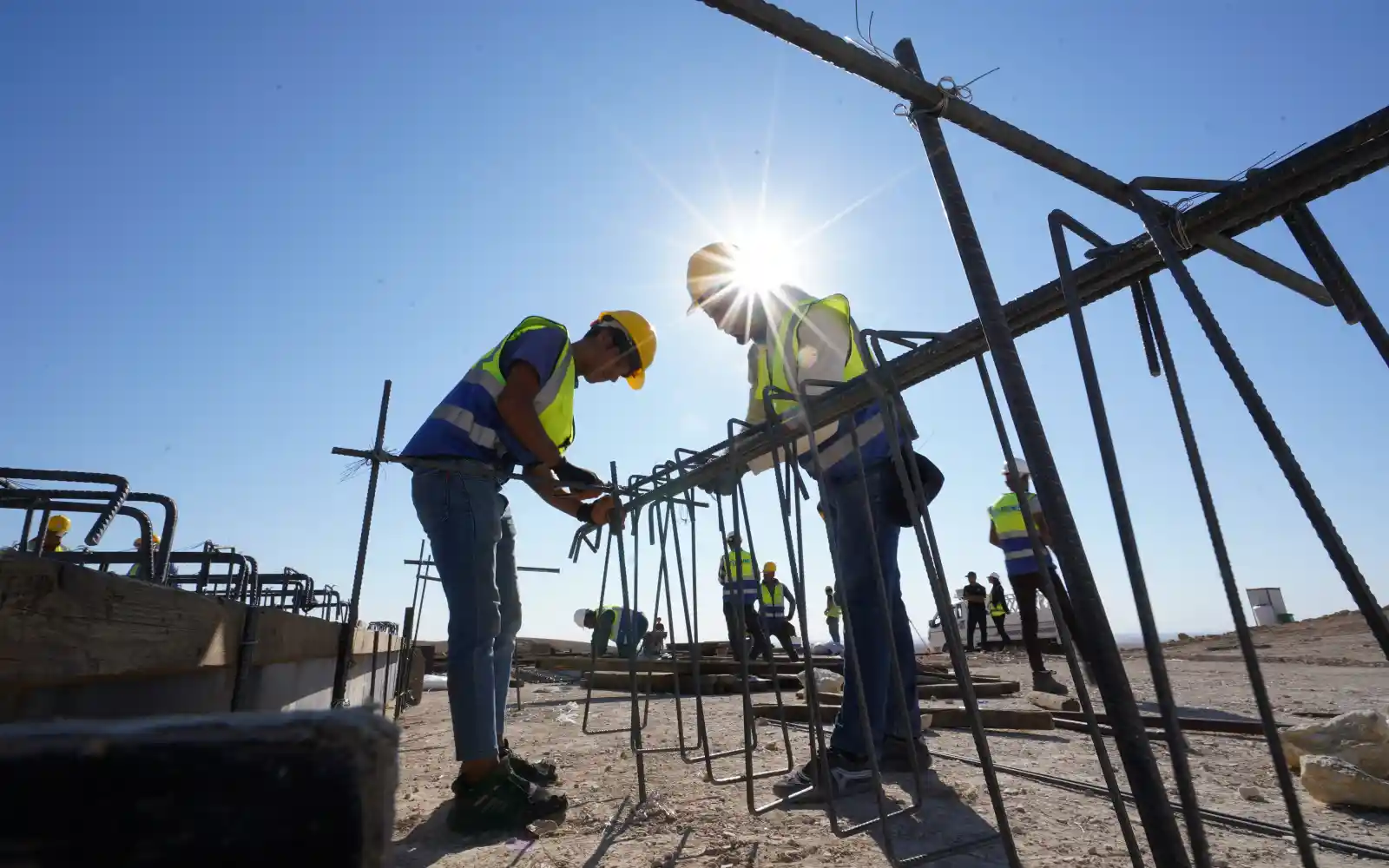
Let me highlight the UNOPS fee-for-service model and focus on implementation. In the context of UN80, UNOPS agile model represents a concrete, proven operational option for the system. UNOPS is focused on action and results. While the organisation does not have a programmatic or normative mandate, our role is implementation, delivering infrastructure, procurement, and project management services on behalf of our partners to the people we are committed to serve.
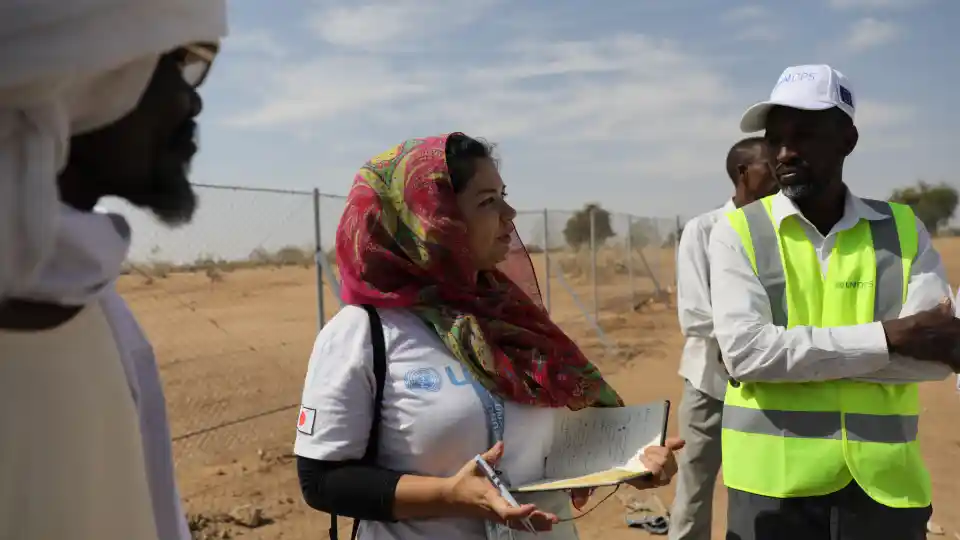
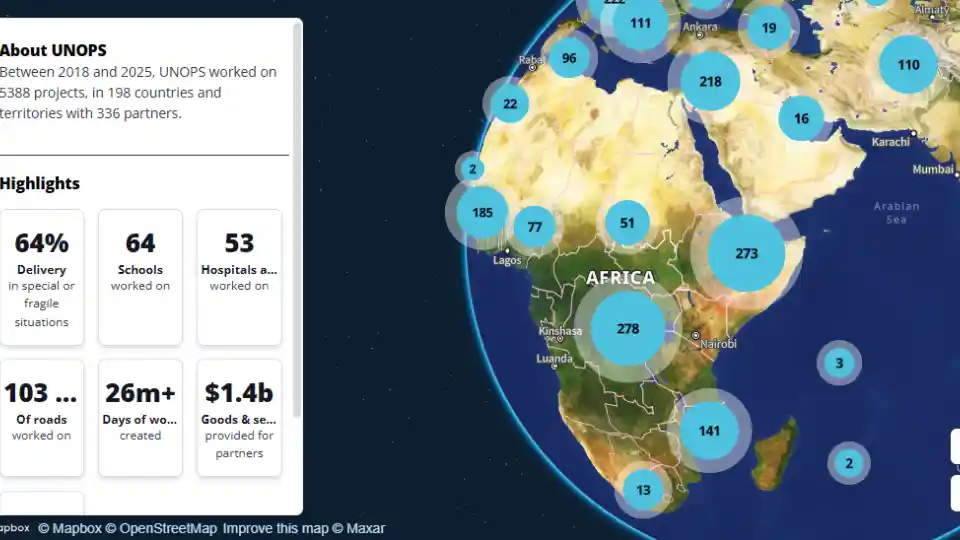
These partners include UN entities, international financial institutions, donor and programme countries, vertical funds and multilateral initiatives. Two thirds of all our work takes place in special or fragile contexts.
We de-risk delivery and development capacity, in an efficient, effective and accountable manner.
And while we do not receive core-funding, we provide services in exchange for the full recovery of costs.
That means that UNOPS delivers value for money and tangible results in the work that it does.
Over the past three decades, UNOPS delivery has grown nearly eight times.
We have now had an average annual delivery of nearly US$ 3 billion for the past five years.
Last year, - UNOPS delivered $US 2.7 billion in over 130 countries with just 5,500 personnel. On average, that’s half a million dollars in delivery per worker - a record of efficiency few organizations can match.
Our partners recognise the value of this model.
Last year, 85 percent of our partners expressed satisfaction with us. Nearly 90 per cent said they trust UNOPS and the vast majority said they would work with the organisation again.
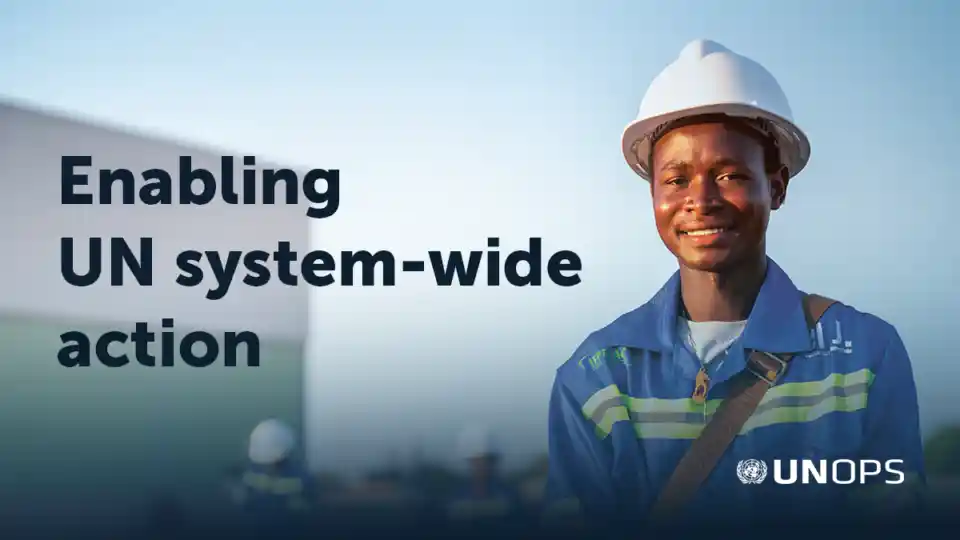
This is a testament to the determination and commitment of the UNOPS personnel, whose “can-do” mindset sums up what this organisation stands for. Everyday, they work tirelessly to deliver impact for people and countries, even in the most challenging and dangerous contexts.
In these times of wavering donor contributions and unprecedented challenges to development and multilateralism, UNOPS and its business model are more relevant and needed than ever to scale up and deliver to those who need us most.
For every project we implement, we agree upfront with our partners on delivery time, cost, and quality. Charging a minimum management fee to cover oversight and institutional costs at just over four per cent, this remains one of the lowest average fee across the UN.
This model allows UNOPS to fully recover its costs for the whole organization.
I am sure that - in case we go for a merger into a new entity - we will find a way to preserve this distinct added value. But, I even believe that - beyond this specific merger - UNOPS fee for service model offers a possible pathway for a credible reset of the UN system - one that can deliver sustainable impact at scale and support the Pact for the Future.
Thank you.
Media enquiries
For more information please contact:
Juliette Touma, UNOPS Director of Communications, +45 53 52 01 27, juliettet@unops.org