



The United Nations Office for Project Services (UNOPS)
Déclaration devant le Conseil d’administration à sa deuxième session ordinaire de 2026
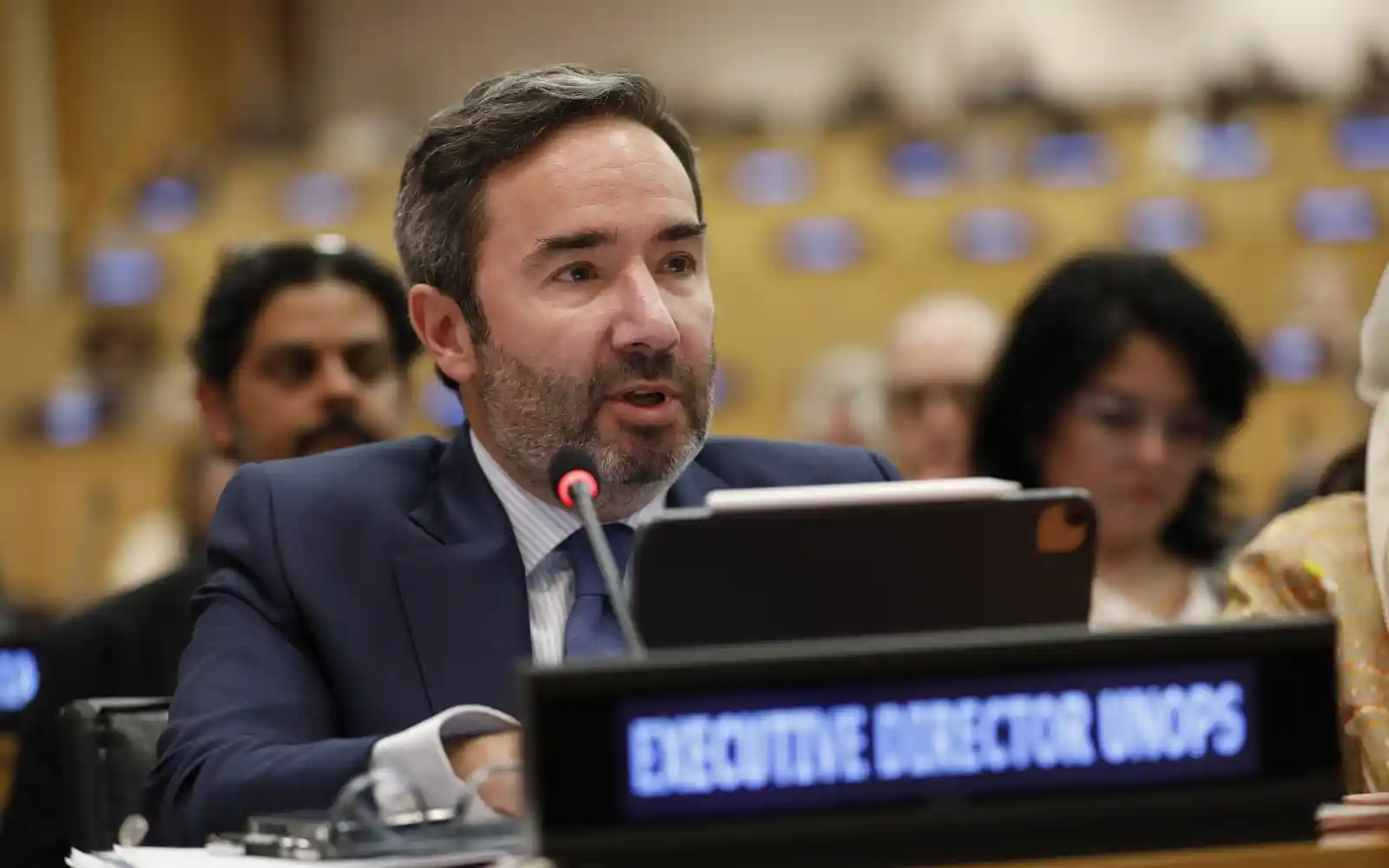
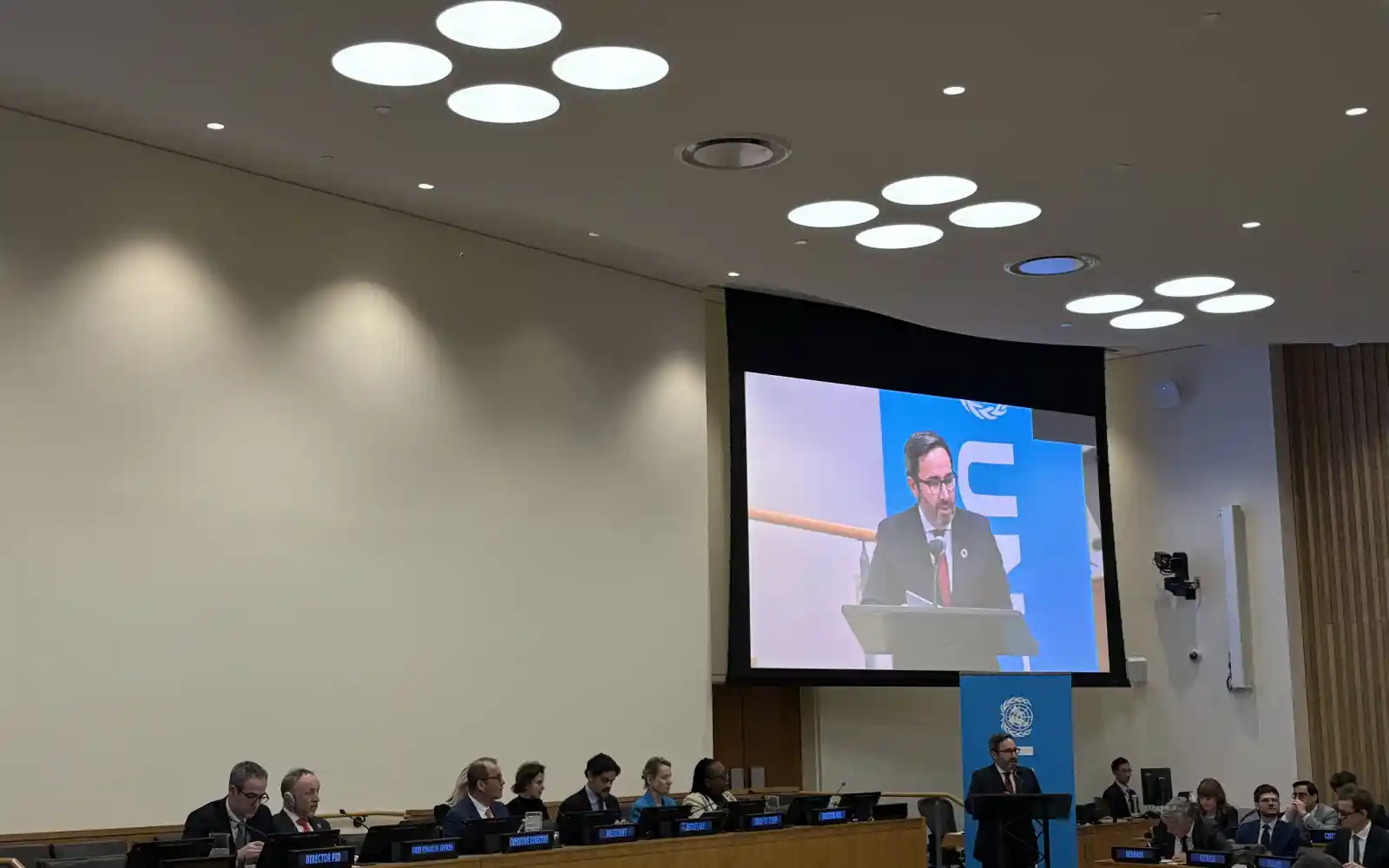
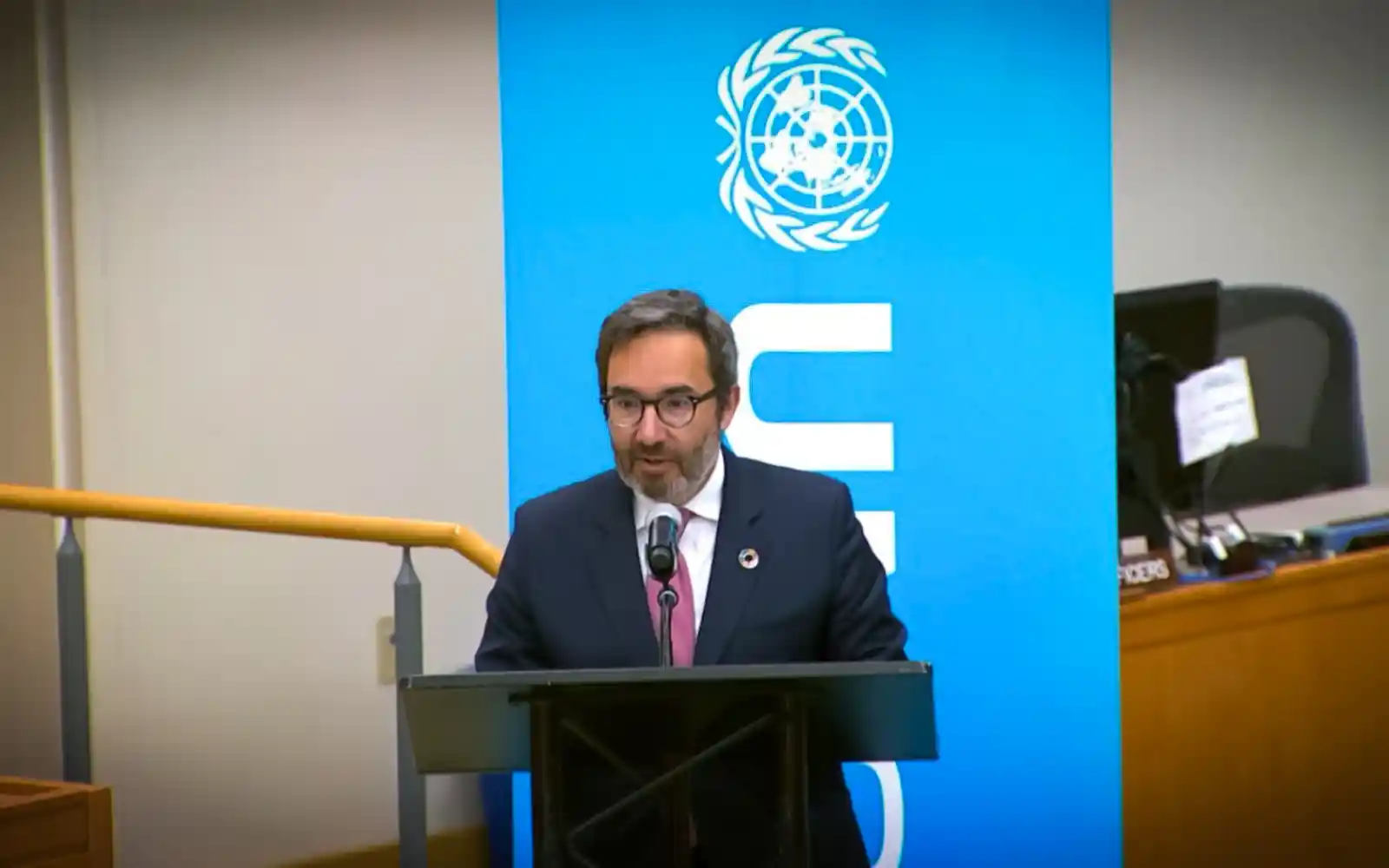
Déclaration de Jorge Moreira da Silva, Secrétaire général adjoint des Nations Unies et Directeur exécutif de l’UNOPS, à la deuxième session ordinaire du Conseil d’administration du PNUD, du FNUAP et de l’UNOPS, le 25 août 2026 (en anglais).
[Check against delivery]
Séance du 25 août (interprétation en français disponible) ici
Mr. President,
Distinguished Members of the Executive Board,
Colleagues, partners and friends,
It is an honour to address you today.
In the last few years - in parallel with formidable transformations and breakthroughs on energy, artificial intelligence, medicine and biology - we have also witnessed an unprecedented increase of temperature and climate impacts, an unprecedented loss of biodiversity, an unprecedented drop of Official Development Assistance (ODA), and an unprecedented - since World War II- increase in conflicts and forced displacement, together with an unprecedented perception of impunity and double standards.
Rather than complacency or nostalgia, what these worrying trends on peace, development and humanitarian landscape require is a strong commitment to rebuilding the trust of citizens in sustainable development and multilateralism.
More than half of the world’s population express little or no trust in their governments. And many don’t think multilateralism works for them.
This is why leaders, institutions and decision-makers must do much more to restore trust and rebuild the social contract with communities.
So, how do we rebuild trust and reconnect to people’s aspirations? This is a response all institutions must provide, according to their own mandates.
From UNOPS point of view - and based on our mandate - two things are key:
We need to deliver results for people and show impact. And we need to deliver meaningful reforms.
For all of us here, this should be a moment of accountability. How are we doubling down on our mandates to get things done and deliver for people?
Allow me to anchor my statement around these two areas.
***
Delivering Results for People
I will start with some of the improvements that UNOPS has delivered for people, through the lens of our eight UNOPS Missions.
Established to accelerate progress towards the Sustainable Development Goals (SDGs) and our Strategic Plan 2026-2029 , the missions help us stay strategic, agile and prepared.
These non-programmatic missions are crucial given UNOPS implementation mandate and fee-for-service business model, allowing us to respond quickly to emerging crises and work in high-risk settings, where two thirds of all UNOPS work takes place.
As we stated in the Strategic Plan 2026-2029, the eight non-programmatic missions are internal practice areas for knowledge and learning and express needs recognized on Sustainable Development Goals. These missions do not present programmatic intentionality, but readiness to collaborate when we are called on.
An example of this readiness approach was in Venezuela following the double earthquakes last June, UNOPS integrated in the UN response and supported search and rescue teams. The teams are working closely with partners in the country to support reconstruction of houses and recovery.
Let me highlight the relevance and impact of some projects framed by the eight non-programmatic missions:
On Triple Planetary Crisis
Here, we bring together efforts to address climate change, biodiversity loss, and environmental degradation.
In South Asia, with partners, we have prevented nearly 15 million kilograms of plastic waste from reaching rivers and seas and helped recycle over 1.5 million kilograms of plastic waste across six countries.
In Paraguay, UNOPS is helping to strengthen biodiversity conservation, institutional capacity and community engagement in the east.
In South Sudan, we work with partners to strengthen climate resilience by rehabilitating water infrastructure, reducing flood risks and supporting livelihoods.
UNOPS also hosts a number of funds and initiatives to help countries turn climate commitments into action. Examples of this include Initiative for Climate Action Transparency (ICAT), NDC Partnership - to support countries with Nationally Determined Contributions - and the Forest and Climate Leaders’ Partnership (FCLP).
On Energy Transition
Supporting countries in their clean energy transition is another major area of focus.
A combination of climate shocks and energy crises brought about by disruptions to shipping via the Strait of Hormuz has made the case for clean energy transition stronger than ever. UNOPS works with partners to increase energy access and accelerate net-zero transition, promoting renewable energy and energy efficiency.
One example is our partnership with SEforAll, which UNOPS hosts. Together, we support Sierra Leone’s green energy ambition to raise renewable energy use to 85 per cent by 2030 and provide electricity to rural areas by 2027. For people in rural Sierra Leone, the impact has been life-changing: students can study in the evenings, businesses can keep products cold, fishers can keep their catch fresh for longer, and people feel safer after dark.
On Small Island Developing States (SIDS) resilience and sustainability
UNOPS supports SIDS in increasing resilience to shocks and driving a sustainable ocean economy.
In Haiti, we work to build safer, climate-resilient schools. With partners, UNOPS has supported the rehabilitation and adaptation of schools, improving safety, climate resilience and learning conditions for students and communities.
Together with UNDRR, UNOPS co-hosts the Santiago Network, which catalyzes technical assistance on climate-related loss and damage. In 2025, they started offering tailored support to Vanuatu. Its pipeline is growing with around 30 active requests for country-led technical assistance globally.
On Quality Healthcare
The organization's efforts to support people getting health care continue, as half of the world lacks that life saving access.
UNOPS teams improve health infrastructure, they buy and deliver supplies and services and manage health programmes and funds.
In Myanmar, the UNOPS-managed ‘Access to Health Fund’ reached 4 million people last year alone, supporting essential health services in an extremely challenging and fragile context.
In Ukraine, as part of extensive response and recovery efforts, which are estimated to reach more than 1 million people every year, teams are supporting the recovery of critical infrastructure, strengthening health services in communities under attack, including through underground health infrastructure, supplying health and energy equipment, and providing explosive-ordnance risk education for communities close to the front line.
On Just digital transformation
Digital transformation is another area where UNOPS offers practical solutions.
In Sri Lanka, we are helping digitize 30 state hospitals, helping build a central Health Data Centre, and scale up national electronic health records.
In Montenegro, UNOPS is working with the government to strengthen vital Information Technology infrastructure and local e-Government Services, and digitize the rule of law sector.
On Social Protection, Equality, Education and Jobs
UNOPS provides essential and sustainable services and infrastructure to communities and promotes education and decent job creation to overcome inequalities and build prosperity.
In Afghanistan, the Community Resilience and Livelihoods Project is providing short-term jobs and improving access to essential services, helping people - including women, poor and other vulnerable groups to improve their livelihoods. Funded by the World Bank International Development Association and the Afghanistan Resilience Trust Fund, the project has reached 15.5 million people in the past four years and is one of the country’s largest community-driven initiatives.
On Humanitarian, development and peace nexus
With over half of our portfolio in fragile and conflict-affected contexts, UNOPS continues to help address the root causes of fragility and support communities affected by conflict and disasters.
Yemen is a case in point.
UNOPS with partners helps restore electricity to health facilities, schools, and water systems using decentralized solar solutions reaching one in every six people in the war torn country. This generated over 2.5 million days of employment including for women.
In the Gaza Strip, UNOPS supports critical humanitarian and early recovery operations. UNOPS brings in fuel for the UN and humanitarian organizations including hospitals, water plants, kitchens and shelters for displaced people. Together with the UN Mine Action Service (UNMAS), UNOPS supports humanitarian efforts and rubble clearance by helping mitigate the risks of landmines and unexploded ordnance. Our teams operationalise the UN 2720 Mechanism to expedite, facilitate and verify humanitarian aid entering Gaza, and the Access Support Unit to enable personnel movements, critical medical evacuations, and civilian return movements from Rafah.
On Food systems transformation
We help countries improve food security and healthy diets. In Chad, teams are supporting efforts to strengthen the agricultural sector. This includes procuring means of transport to improve mobility in hard to reach areas. UNOPS is buying over 760 tonnes of fertilizers primarily from suppliers in the African continent to reduce dependence on international supply chains.
***
Reforms
Honourable members,
These are some ways in which UNOPS and dedicated teams deliver for communities around the world.
Tangible and quantifiable results and impact - this is what Member States and the UN are asking for and this is what we strive to do everyday at UNOPS - it is in our DNA.
Meanwhile, onto the less visible but equally critical aspects.
Over the past few years, UNOPS conducted a comprehensive set of reforms to continue enhancing accountability, transparency, internal controls and trust.
UNOPS management strengthened internal audit, ethics, and investigation mechanisms, and improved risk management and internal controls.
Last year, this Board approved our Strategic Plan 2026-2029, which reinforces our commitment to scale up and speed up our response at a time of compounding global crises.
As we continue on our transformation journey, we will focus on four key areas:
- Centring foresight and impact;
- Maturing partnership development;
- Integrating service lines: infrastructure, procurement, project and programme management, and UN Support Services to improve delivery of results; and
- Strengthening geographic footprint.
We have made significant progress on accountability. Our Accountability Framework enhances governance through clear lines of responsibility and increased transparency.
We continue to make progress on different initiatives, including digital transformation through the Process Innovation and Digitalization programme.
The organization's culture efforts are progressing and we are running a series of ethics training sessions, with a focus on ethical decision-making.
We are also deeply commited to the highest level of ambition in the context of UN80 reforms.
We continue to reform because we aspire to deliver the best for communities and our partners.
And our partners see this. Our latest partnership survey showed record levels of strong trust in UNOPS and growing demand for integrated, practical solutions.
Our financial performance and outlook for the organization is robust. In 2025, our implementation of project services exceeded $2.7 billion, slightly increasing from prior years. We have continued our track record of cost effective implementation with an average recovery rate of only 4.2 per cent. We signed new agreements with partners for more than $3 billion. This underpins our ambition of meeting partner demand to scale up implementation.
This brings me to the final - and particularly important - issue for the management of UNOPS. Since 2022, my authority as Executive Director to decide on multi-year investments into the sustainability of the organization has been paused. Recognizing all the reforms that UNOPS implemented these past 4 years, it is important to reinstate a working capital mechanism that is fundamental for the agility and sustainability of the UNOPS fee-for-service model. Such a working capital mechanism is enshrined in the financial governance of most UN entities.
****
Mr President,
Let me conclude by returning to where I started: in uncertain times, trust is critical. Delivering tangible results, demonstrating impact and continuing to reform and improve can contribute to that.
UNOPS is committed to these efforts.
In closing, I am delighted to share some voices of the communities we serve: over to them.
Thank you.