



The United Nations Office for Project Services (UNOPS)
UNOPS responds to Cyclone Ditwah devastation in Sri Lanka
In the wake of Cyclone Ditwah's devastating impact on Sri Lanka, UNOPS with Vriddhi and local partners has reached over 33,000 people with life-saving assistance.
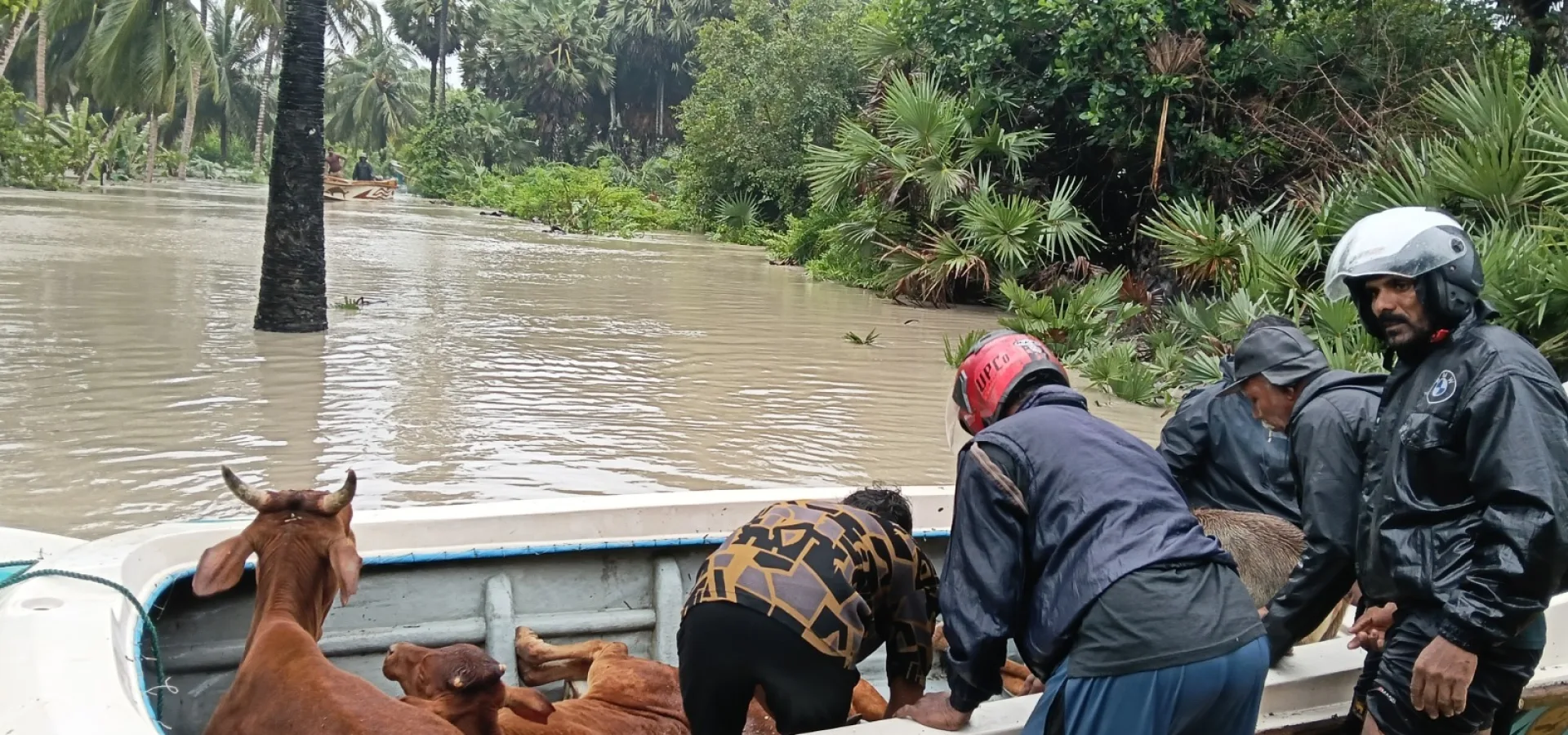
The destruction caused by Tropical Cyclone Ditwah – which triggered catastrophic flooding and landslides across the country – has impacted over 1.5 million people and left over 200,000 displaced. Many have lost everything, including homes, livelihoods and critical infrastructure. Roads and bridges are impassable, with hundreds damaged across the island, and the recovery work is urgent.
“UNOPS will work closely with the government of Sri Lanka in the coming phases, drawing on our team’s experience from three previous emergencies here and dozens more globally,” said Charles Callanan, Director of UNOPS Multi-Country Office in South Asia.
In addition to unprecedented rainfalls exacerbated by climate change, poor urban planning, unchecked construction practices and governance challenges have compounded the crisis – creating a perfect storm of risk, and leaving vulnerable communities highly exposed to the devastating consequences from the cyclone.
In addition to unprecedented rainfalls exacerbated by climate change, poor urban planning, unchecked construction practices and governance challenges have compounded the crisis – creating a perfect storm of risk, and leaving vulnerable communities highly exposed to the devastating consequences from the cyclone.
It will take everything we all have – government, communities, international partners and the private sector – to help the country recover and to rebuild in a way that is safer and more resilient.
Together with partners, UNOPS is responding to these complex challenges by delivering emergency aid, including dry rations, cooked meals, hygiene kits and sanitation support. The team is also working with local authorities to provide safe water, water purification services, and monitor ongoing needs to ensure resources reach the most vulnerable.
As part of its continued efforts, UNOPS plans to scale up its response, to reach over 150,000 individuals with additional relief efforts in the coming week. Working with the government of Sri Lanka and local communities, UNOPS will continue to focus on both immediate recovery and long-term resilience.