


The United Nations Office for Project Services (UNOPS)
UN Senior Leadership Group on Disaster Risk Reduction for Resilience
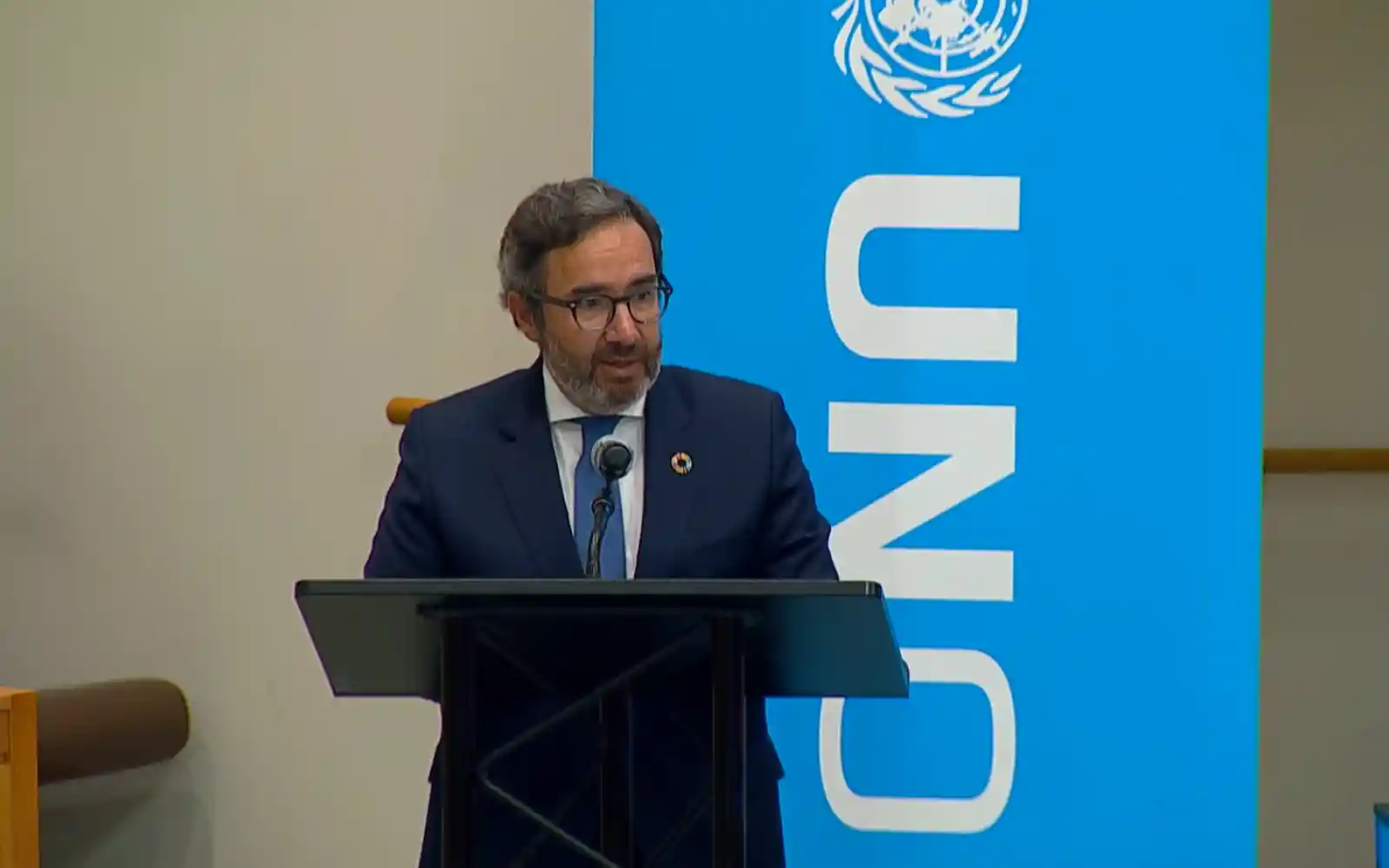
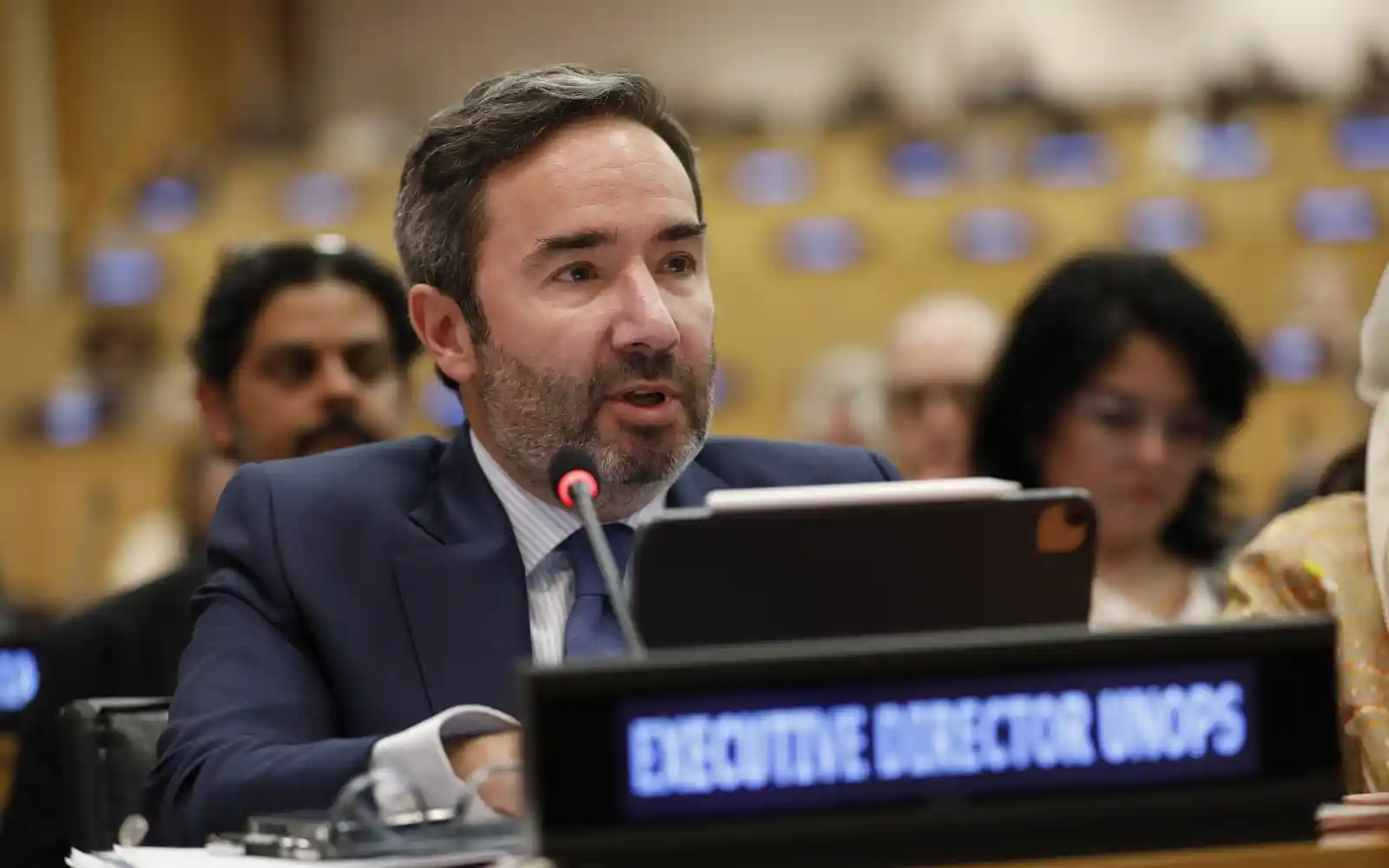
Intervention by Jorge Moreira da Silva, UNOPS Executive Director, on strengthening the UN's contribution to disaster risk reduction, prevention and resilience-building in the context of funding cuts and reforms – UN Senior Leadership Group on Disaster Risk Reduction for Resilience, New York, 14 July 2026.
[Check against delivery]
Thank you, chair.
I am delighted to join you today.
Our collective efforts towards disaster risk reduction (DRR) have never been more urgent and equally under pressure. We face a dangerous convergence of escalating armed conflicts, climate disasters, and financial challenges and a $4 trillion SDG funding gap.
Disasters now cost the global economy more than $2.3 trillion annually. Investments outpace the available resources to respond while Overseas Development Assistance has dropped by nearly 25 per cent, for the first time in history.
Funding cuts are reducing the humanitarian network’s capacity for prevention and disaster risk reduction.
This is exactly why disaster risk reduction must be protected and in practical terms embedded across all key sectors, including infrastructure, urban planning, water and social development programming.
***
Allow me to share some thoughts on how the United Nations together with partners can increase our collective impact on disaster risk reduction.
First - build government capacity and strengthen an enabling environment to manage and improve DRR.
This is crucial to move away from short-term stand alone projects - and pivot towards long-term impact based initiatives.
Many governments do not necessarily lack financing - they lack the capacity to implement and spend available resources, resulting in high debt burdens with no service improvements for people.
By providing project management support that integrates disaster risk reduction into development programmes, the UN can help overcome implementation bottlenecks.
One example of this approach is in Costa Rica, where UNOPS and UNDRR have joined forces to support the government in a national emergency response programme to rebuild damaged infrastructure and improve systems’ resilience - reaching more than 2 million people.
Second - we need to speed up and scale up implementation for communities most in need.
The burden of climate risk is disproportionately borne by Small Island Developing States (SIDS), Least Developed Countries (LDCs), and fragile states. In these contexts, disaster risk reduction is one of the most effective ways to bring the humanitarian, development and peace agendas together in practice.
To speed up recovery, we must combine frameworks and global expertise with strong delivery of results.
In Kiribati, UNOPS is embedding inclusive, gender-responsive and nature-based solutions into infrastructure delivery. One example is a hybrid coastal protection project that protects health facilities. The use of nature based solutions means that this work costs around 80 per cent less than conventional concrete seawalls.
In Afghanistan, after the 2023 earthquake in Herat, the UNOPS teams with other UN partners - combined traditional earthquake resilient building techniques with accountability to communities through receiving feedback that supported recovery efforts.
UNOPS partnership with UNDRR as co-hosts of the Santiago Network Secretariat is a model for "integrated approaches" of the UN system, pairing UNDRR's technical and risk expertise with UNOPS' operational and financial management capacity. Together, we support the Santiago Network Secretariat in responding to countries' priorities to move “loss and damage” support from pledge to delivery.
Third - maximise coherence and pool resources at the country level.
Financial constraints should not lead to fragmented initiatives. They should drive greater partnerships and cooperation. Under Resident Coordinators’ leadership, the UN can work more strategically as one body pooling expertise and resources to maximise impact for communities and reduce duplication.
And finally, a word on cities and municipalities, where global commitments are put to test. They are the level of governance closest to people’s lives. They are where the New Urban Agenda, the Sendai Framework, and the Paris Agreement come together. Risk informed and resilient urban planning can reduce risk of disasters and drive climate adaptation. UNOPS will continue supporting efforts to make cities more resilient and sustainable.
In closing, colleagues, it’s time to break the silos.
By working as “one UN” - combining policy advice, technical assistance and implementation - we can support governments serving communities, create resilient systems and work together towards achieving the ever lagging behind development gains.