



The United Nations Office for Project Services (UNOPS)
Virtual reality technology: Improving awareness of explosive risks in Ukraine
A new approach to teaching will help mitigate explosive device-related risks and save lives.
As a result of the ongoing full-scale invasion of Ukraine, a large portion of the country's land is potentially contaminated with mines or other explosive remnants of war.
Despite ongoing efforts to clear land and ensure safety for communities, raising public awareness of the dangers of unexploded ordnance remains crucial – especially for children and young adults, whose curiosity may put them in harm’s way.
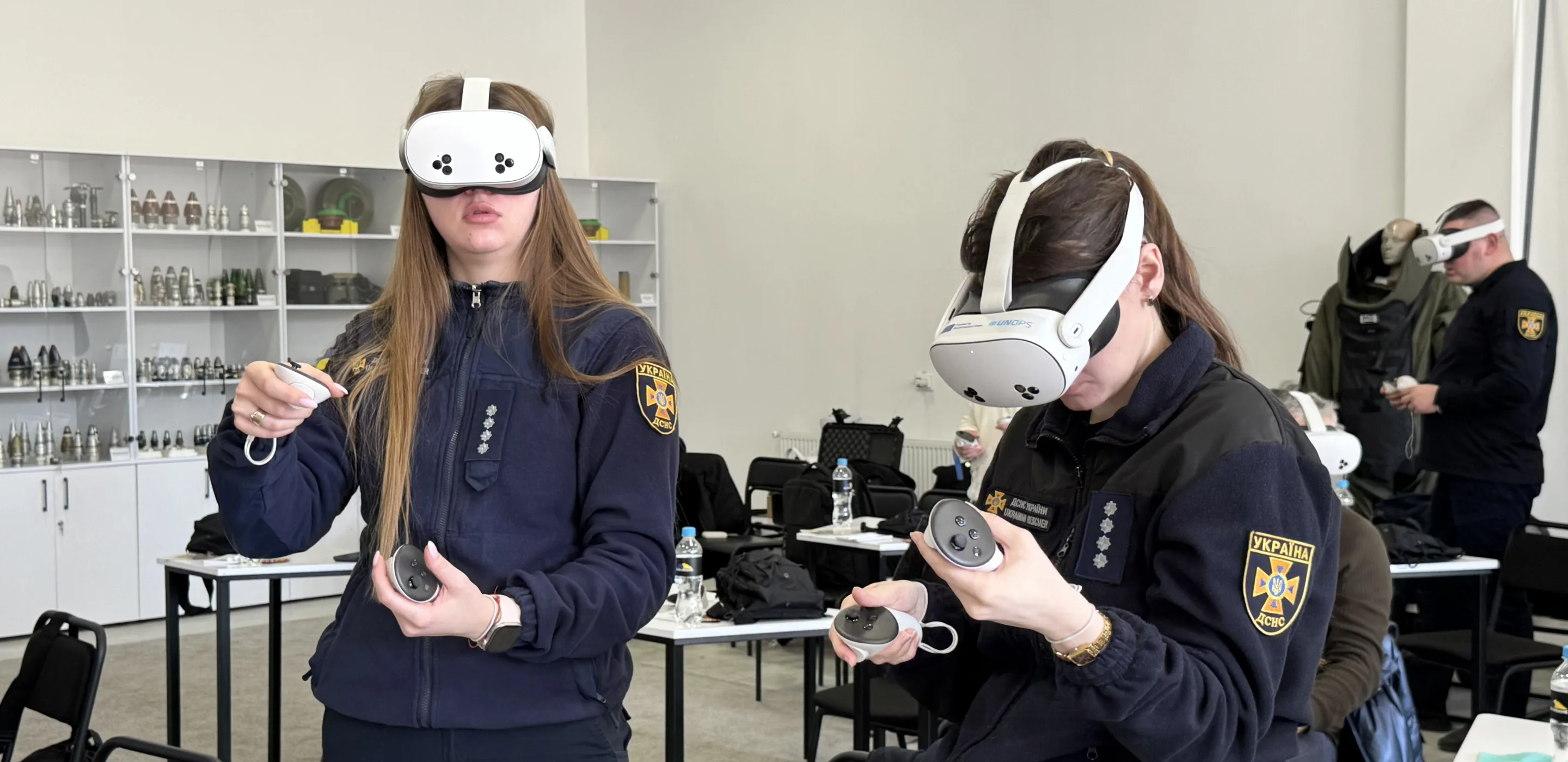
With funding from the European Union, UNOPS is providing Ukraine’s State Emergency Service (SESU) with 60 virtual reality goggles with training software designed to teach the basics of explosive ordnance identification.

This is the kind of innovation that can seriously enhance safety and literally save lives.
The goggles will help teach wide audiences some of the fundamental rules if they encounter a dangerous item or find themselves in a hazardous area. The visual nature of the goggles is especially good for teaching tech-savvy young audiences about the dangers of explosive hazards.
"In our own experience, we’re seeing great responses to the virtual reality application from children and young adults," says Daria Marotta, Country Operations Manager at Safer Access.
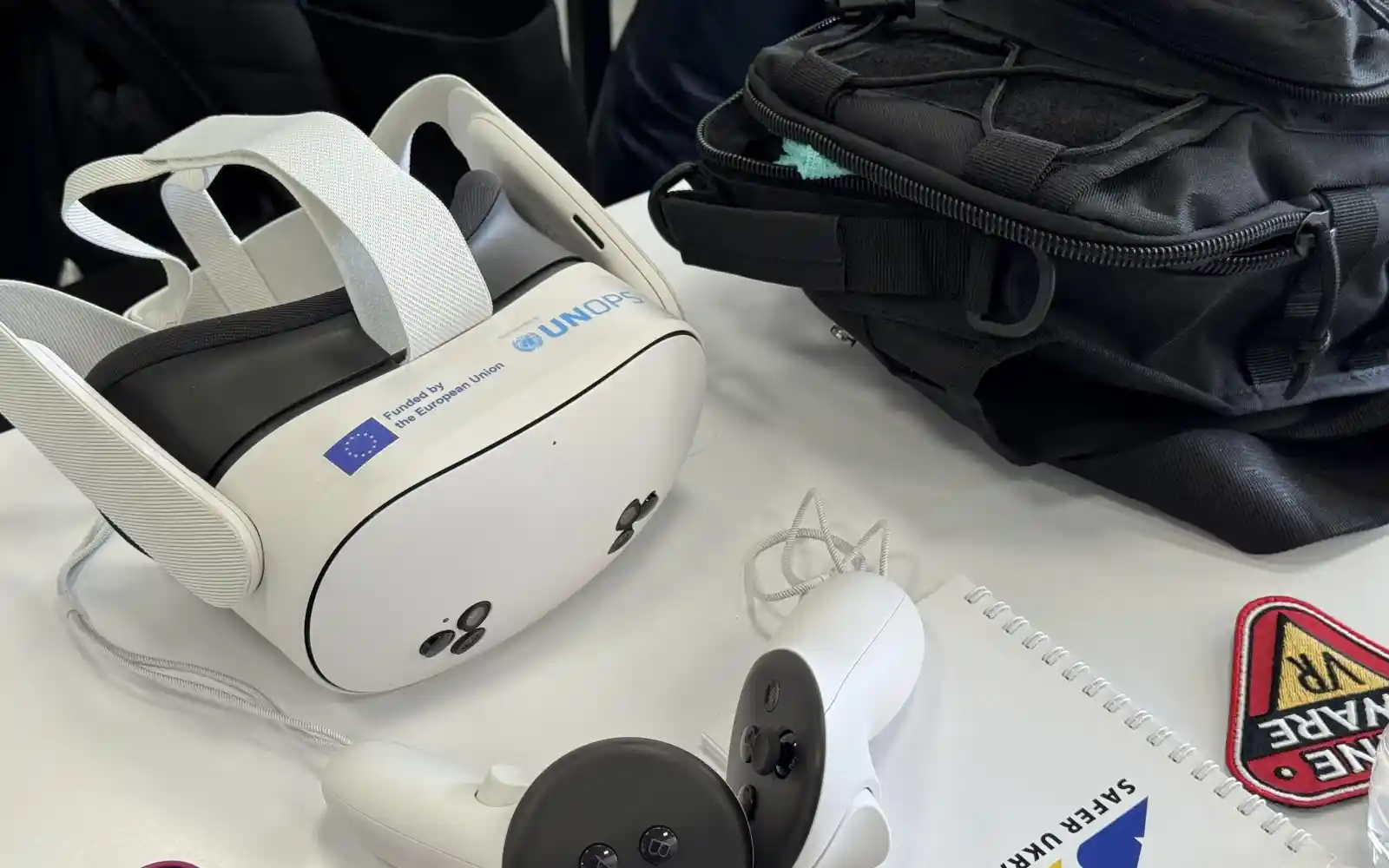
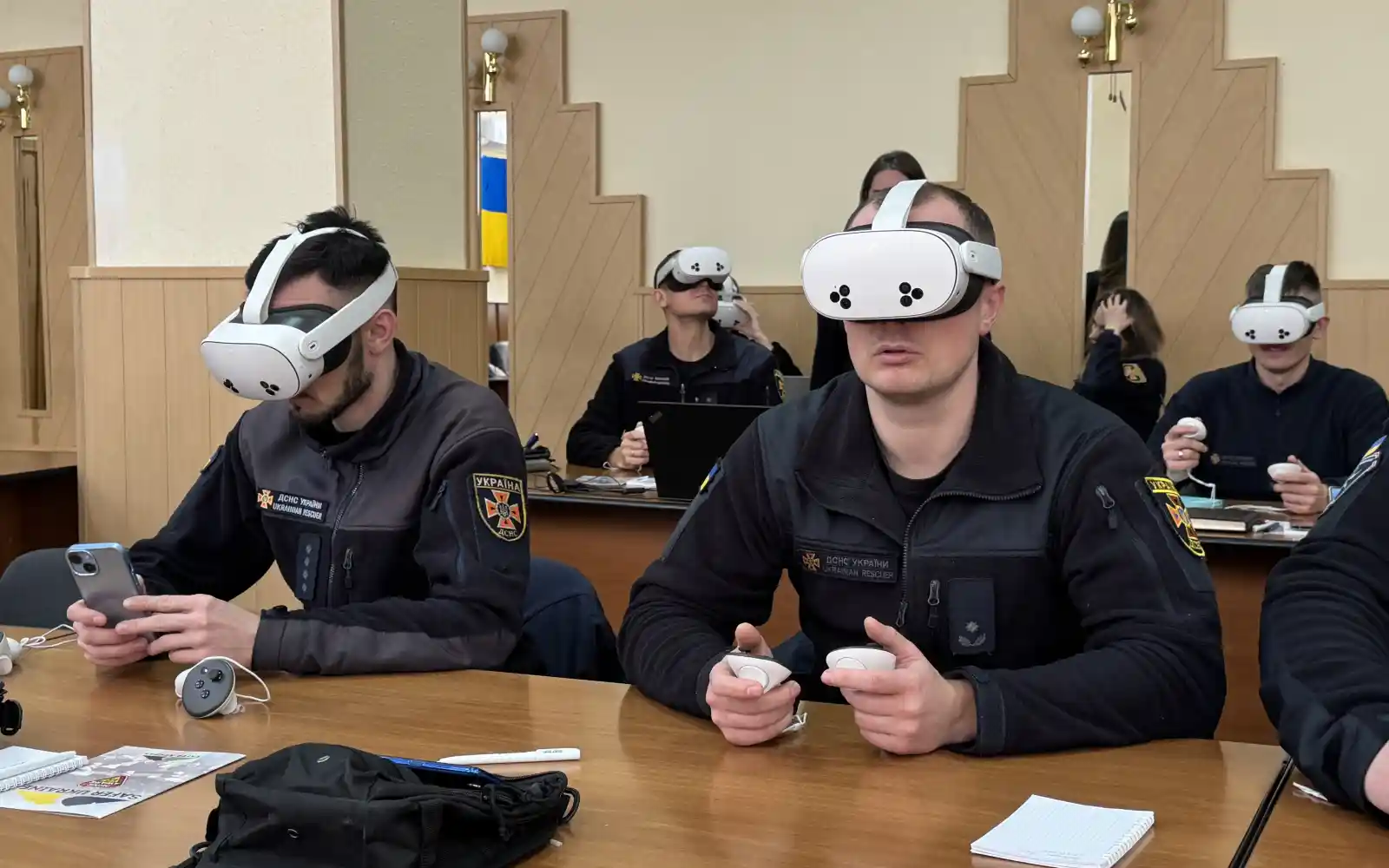
As part of the project, UNOPS also supported two training sessions on ways to integrate the new technology into awareness-raising activities for a total of 60 experts at SESU universities, which will receive the sets.
"With the way the devices let the user see threats in a realistic environment, they will certainly improve audience engagement and help us shape the right behaviour patterns among our trainees,” said Serhii Tarasov, Head of the Institute for Engineering and Special Training at the National University of Civil Protection.
Once the goggles are handed over to the two universities, they will be integrated into classroom learning and public-facing awareness-raising activities.
About the project
With funding from the European Commission, the 'Quick Impact and Rapid Response Fund (QIRRF) for Mine Action in Ukraine' project helps support communities in Ukraine, mitigate risks from explosive hazards and facilitate recovery and reconstruction amid ongoing challenges.
Global Goals we are supporting through this initiative: