



The United Nations Office for Project Services (UNOPS)
Cleaner air for North Macedonia: breathing new life into cities
The European Union (EU) and UNOPS are working to improve air quality in North Macedonia with a €10 million project that aims to reduce pollution, protect health, and create greener cities.
Latest updates:
September 2026
- Upgrades to heating systems across 32 schools and public buildings in North Macedonia are now complete. Switching away from polluting energy sources reduced air pollutants (PM1 and PM2.5 emissions) by up to 99 per cent, creating healthier, safer learning environments for thousands of students while cutting heating costs by 30 per cent.
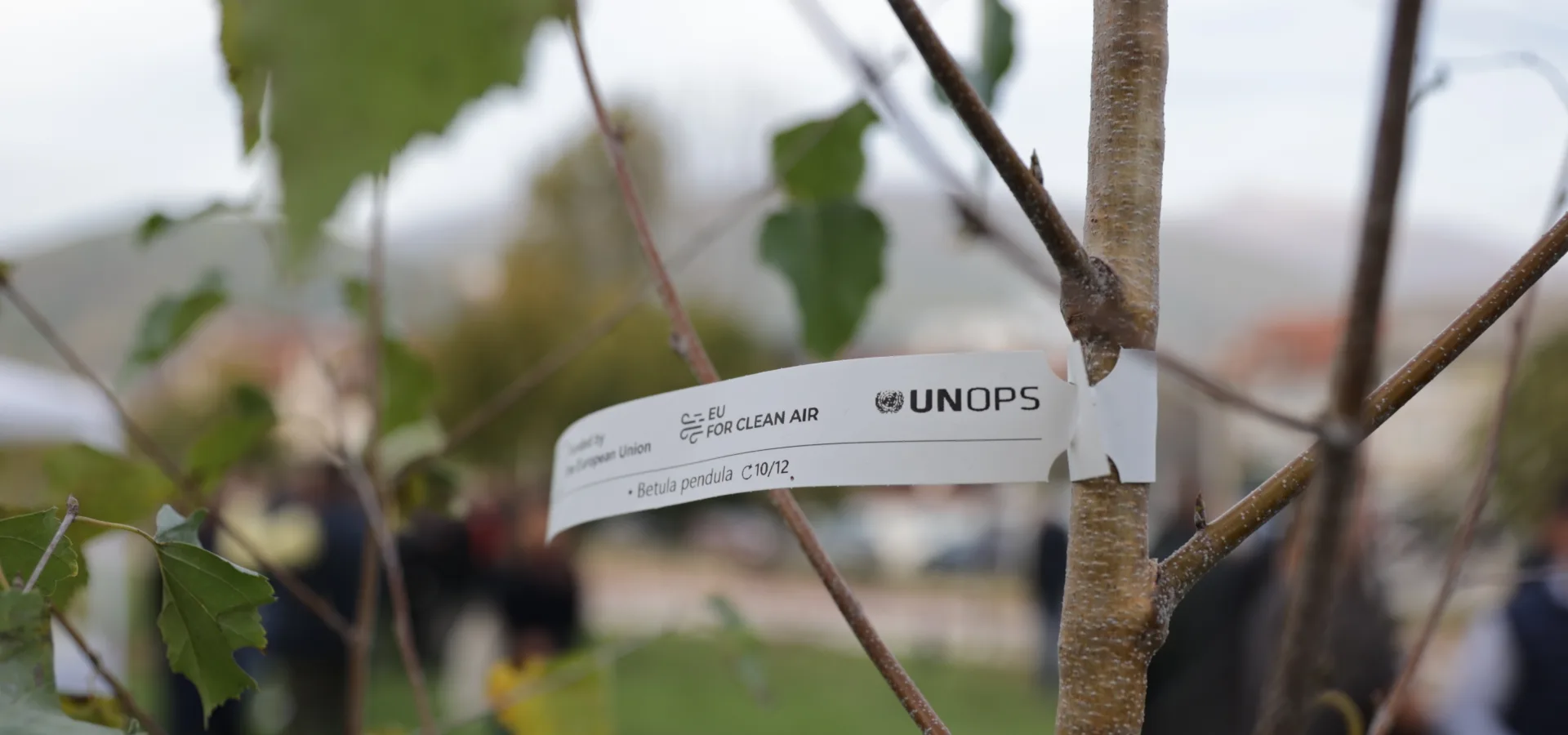
- More than 6,000 students and local residents joined municipal authorities to plant 6,210 trees across Skopje, Bitol, Kumanov and Tetovo. The new green infrastructure acts as a natural air filter while giving communities vibrant spaces to connect.
- Six eco-friendly compressed natural gas buses meeting EURO 6 standards are now operating in Skopje. The new fleet provides cleaner daily commutes while reducing toxic particulate emissions by over 90 per cent along major urban routes.
- Precision air quality monitoring equipment has been installed to track volatile organic compounds, heavy metals and other previously unmeasured pollutants, giving local authorities the data needed to safeguard public health. In parallel, a comprehensive study has been completed to guide Skopje’s long-term transition toward clean district heating.
Air pollution in North Macedonia’s cities, such as Skopje, Bitola, Kumanovo and Tetovo, has long been an issue. It not only poses serious risks to public health but also undermines the country’s efforts to create a more sustainable future. Factors such as aging heating systems, polluting public transport, and a shortage of green spaces have contributed to a deteriorating urban environment, affecting thousands of lives daily.
To combat these challenges, the EU for Clean Air project was created, supported by €10 million in funding from the EU and implemented by UNOPS. This initiative aims to deliver practical solutions that address the root causes of air pollution.
“The challenge of air pollution is one we share globally, and it affects our communities in profound ways – from public health and quality of life to climate resilience. Every investment in green projects is an investment in a better future for all,” said Michela Telatin, Director of UNOPS Multi-country Office in Serbia.
🌳1,500 trees planted in Bitola within the EU funded #EU4CleanAir project implemented by @UNOPS in North Macedonia.
— UNOPS Serbia (@UNOPS_Serbia) November 20, 2024
💚Trees are nature's air purifiers! They absorb pollutants, trap harmful particles, and produce oxygen = cleaner air & healthier communities! 🌿🇲🇰🇪🇺🇺🇳@AmbassadorEU pic.twitter.com/bsnHtjALOZ
Among its key actions is the replacement of inefficient heating systems in 70 public buildings with modern, energy-efficient alternatives. This transition not only reduces harmful emissions but also ensures healthier indoor environments for public spaces such as schools and healthcare facilities.
The project also delivered six new eco-friendly buses powered by compressed natural gas in Skopje. These buses represent a significant step forward, cutting emissions and offering residents a safer, more reliable transportation option.
"This is just one of the activities planned under the EU for Clean Air project, directly addressing one of the identified sources of pollution,” said the Minister of Environment, Izet Mexhiti.
The new buses in Skopje will not only reduce pollution, but also lower operating costs, with each bus expected to save up to €20,000 annually compared to older models.
“[This] is a first, transitional step toward a full green public transportation system. In the long run, the authorities should work towards making public transportation an ever more viable, efficient and greener alternative for commuting.” said Michalis Rokas, the Ambassador of the European Union to the Republic of North Macedonia.
The more people choose public transport, the better chance we have at protecting the environment and at improving living conditions.
Additionally, the project is planting 6,000 trees in urban areas to improve air quality, reduce carbon dioxide, and create greener, more welcoming public spaces for recreation and community activities.
In Skopje, a comprehensive study is underway to explore expanding the city’s district heating system. This initiative has the potential to provide cleaner, more sustainable energy solutions, further reducing the city’s reliance on polluting fuels.
Complementing these measures, air quality monitoring instruments are being installed to track pollutants that until now were not monitored. This will not only provide valuable data to guide policies and ensure accountability, but also support North Macedonia in aligning with EU standards.