


The United Nations Office for Project Services (UNOPS)
“Returning felt natural”: A Q&A from the frontlines of mine action in Gaza
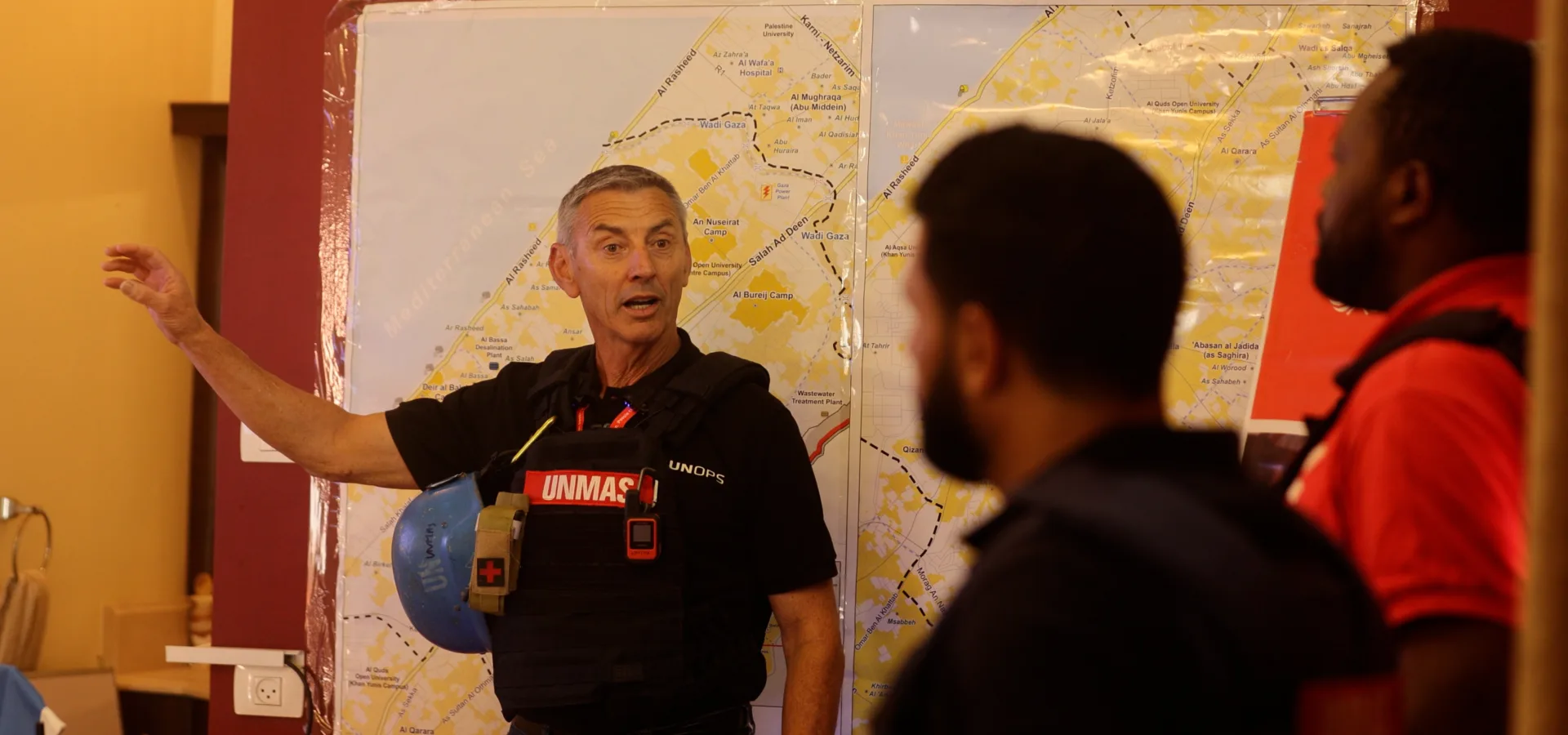
One year after surviving an attack in Gaza, UNOPS Senior Field Security Advisor Joel Fournet reflects on the personal cost of conflict and why he continues the high-stakes work of helping make the world’s most dangerous places more safe.
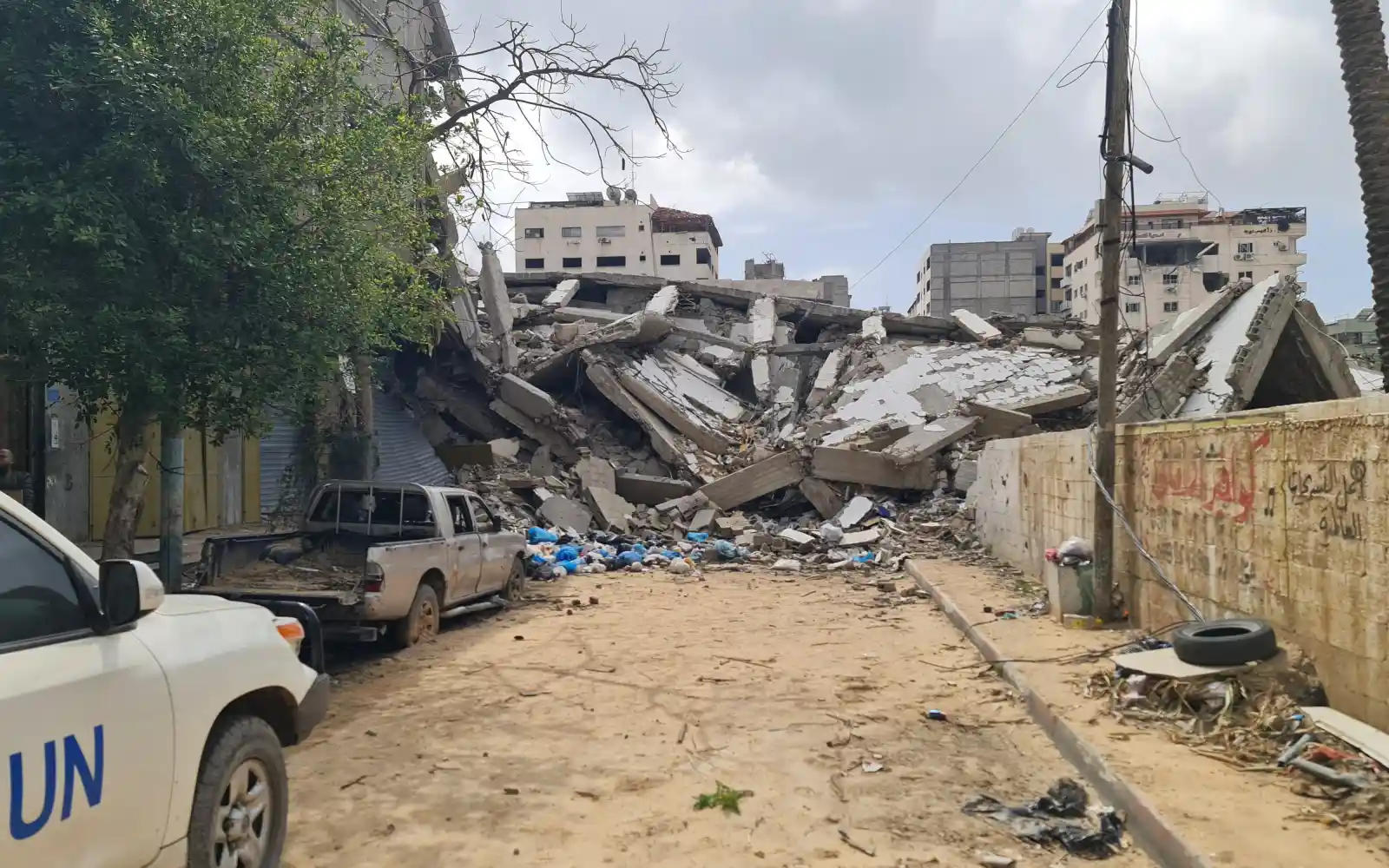
One year ago, a UN residence in Deir al-Balah, Gaza, came under attack. For Joel Fournet, UNOPS Senior Field Security Advisor, the tragic incident was personal.
In this special Insights Q&A, Joel shares what keeps him returning to work – despite the risks. His work is a vital part of UNOPS efforts to provide the UN and partners with robust operational capacity needed to reduce the risk and impact of explosive ordnance.
Through this critical work, UNOPS in collaboration with UNMAS and other global partners, are enhancing safety and supporting recovery for vulnerable communities in fragile and conflict-affected environments around the world.
In March 2025, a tragedy at a UNOPS accommodation in Deir al Balah unfolded, killing one member of the team and severely injuring five others, including yourself. As you and your colleagues navigated the pain of losing a colleague while recovering from your own injuries, where did you and the team find the strength to keep going?
The strength came from solidarity. We were coping with grief, injuries and shock while kinetic activity was still ongoing. What allowed us to continue was the support we gave each other and the shared sense of responsibility toward our colleagues and the civilians we serve. That collective resilience made a very difficult period manageable.
You returned to the field quickly after being injured. What was the driving force or the specific moment during your recovery that made you say, "I need to get back to work right away”?
For me, returning to Gaza felt natural. Within my role, it mattered to continue supporting a population enduring immense suffering while demonstrating extraordinary resilience every day. Going back was a way to remain useful, to stand with my colleagues and to share the same realities they face. It was also important to show our national staff that, even in an exceptionally difficult period, I would not leave them to face these challenges alone. At the same time, returning carried a deep sense of responsibility to honour the colleagues who were seriously injured and the colleague who lost his life during this tragic incident, and to recognize their dedication and sacrifice.
For me, returning to Gaza felt natural. Within my role, it mattered to continue supporting a population enduring immense suffering while demonstrating extraordinary resilience every day.
For a general audience who might not know the specifics of mine action, how does your work safeguard communities and serve other humanitarian efforts in Gaza?
Mine action creates the conditions for humanitarian work to take place. By managing explosive hazard risks and advising on security, we help protect civilians and enable humanitarian actors to move, access communities and deliver assistance more safely.
When you put on your protective gear each morning, what goes through your mind regarding the risks you face versus the impact you’re making for the community?
There is always an awareness of risk, but the focus is on doing the job properly and protecting the team. What gives meaning to the precautions and procedures is knowing that they contribute directly to civilian safety and humanitarian access.
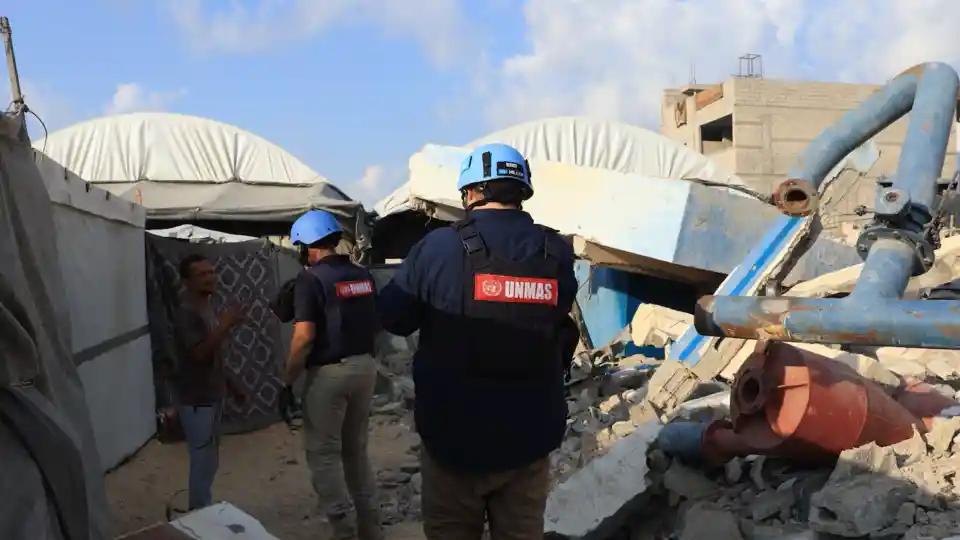
The incident in March 2025 along with other security risks and access constraints make it harder to access all parts of the Gaza Strip. When your teams cannot access an area, what happens to the communities waiting for that land to be assessed? How does safe access by your team impact the survival of the people you’re serving?
When access is limited, communities are left waiting. Unsafe land restricts movement, delays aid, and increases risks for civilians who may have no choice but to enter hazardous areas. Safe access by mine action teams can make an immediate difference to people’s safety and daily survival.
When the job is complete, you will head home or on to a new context and location. Your local colleagues don’t necessarily have that same option. How has working shoulder-to-shoulder with your Palestinian colleagues shaped your perspective, and what have you learned from their resilience?
Working closely with Palestinian colleagues has been deeply instructive. Many continue their work despite personal loss and constant uncertainty. Their resilience, professionalism, and commitment are a daily reminder of the importance of local expertise and human strength in humanitarian operations.
What does a "safe and dignified" Gaza look like to you?
A safe and dignified Gaza is one where people can move without fear of explosive hazards, where humanitarian actors can operate consistently and where recovery can begin in safer conditions. Mine action is not a solution on its own, but it is an essential step toward dignity and safety.
Joel Fournet
Joel Fournet is UNOPS Senior Field Security Adviser, working within the organization’s Peace and Security Cluster in support of UNMAS in the Occupied Palestinian Territory. A veteran of the humanitarian sector, he brings over 15 years of expertise in mine action and humanitarian security coordination, including in the Central African Republic, Gaza, Uganda, and Ukraine. Additionally, Joel served as UNOPS Regional Africa Security Adviser in support of UNOPS Peace and Security Cluster,supporting multi-country operations in Abyei, Burkina Faso, Colombia, Ethiopia, Iraq, Mali, Nigeria, Somalia, South Sudan, Sudan, Syria and Western Sahara in support of UNMAS.