



The United Nations Office for Project Services (UNOPS)
Strengthening Syria’s early warning and disaster response capacities
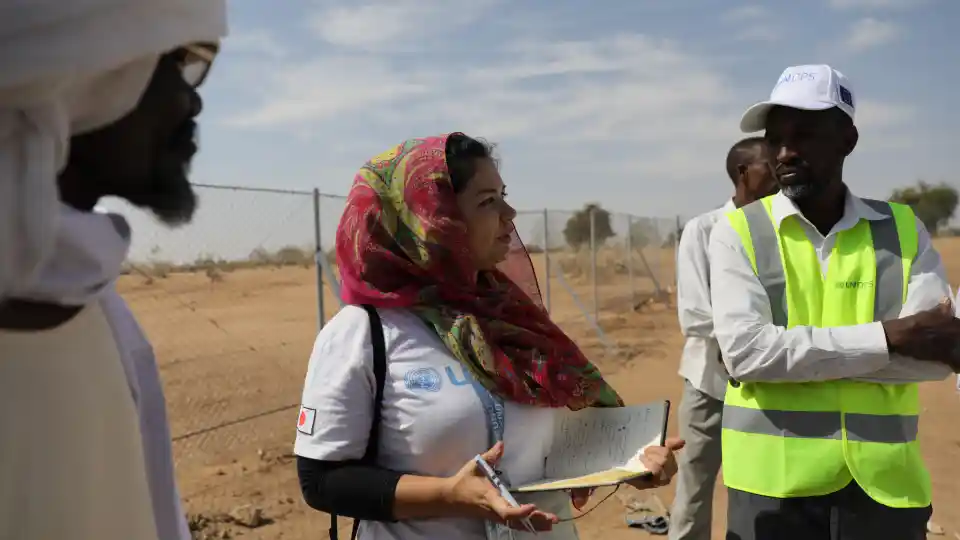
In partnership with the government of Japan, UNOPS will help communities across Syria prepare for natural hazards and climate-induced risks.

Years of crisis, widespread displacement and damaged infrastructure have left communities across Syria vulnerable not only to the impact of conflict but also to increasing natural hazards and climate-induced threats. In this challenging environment, establishing resilient infrastructure and proactive warning systems is critical to saving lives, safeguarding livelihoods and maintaining operational continuity during emergencies.
To help bridge this gap, an initiative supported by the government of Japan and implemented by UNOPS is underway to strengthen Syria’s disaster risk reduction and emergency response preparedness.
The 'Strengthening disaster management and emergency response capacity in Syria' project equips the Ministry of Emergency and Disaster Management with multi-hazard early warning systems and delivers targeted institutional capacity strengthening across Latakia, Idlib, Aleppo and Hama governorates.
In the face of growing climate and disaster risks, strengthening national emergency response capacities is essential to protecting vulnerable communities across Syria.
“In partnership with the government of Japan, UNOPS is proud to support the Ministry of Emergency and Disaster Management in building long-term resilience and emergency preparedness, in line with the Sendai Framework for Disaster Risk Reduction and national priorities,” he added.
Central to the project is the installation of 13 strategically located early warning stations. These stations will provide real-time monitoring and environmental data collection, enabling local authorities and local responders to anticipate threats.
To ensure long-term sustainability and operational readiness, the project also integrates a capacity-building training-of-trainers programme. The initiative further equips ministry personnel and community volunteers with key tools for risk awareness, disaster preparedness planning and early warning communication, enabling life-saving alerts to reach vulnerable communities in a more timely manner.