



The United Nations Office for Project Services (UNOPS)
UN80: System-wide Perspectives and Strategic Considerations
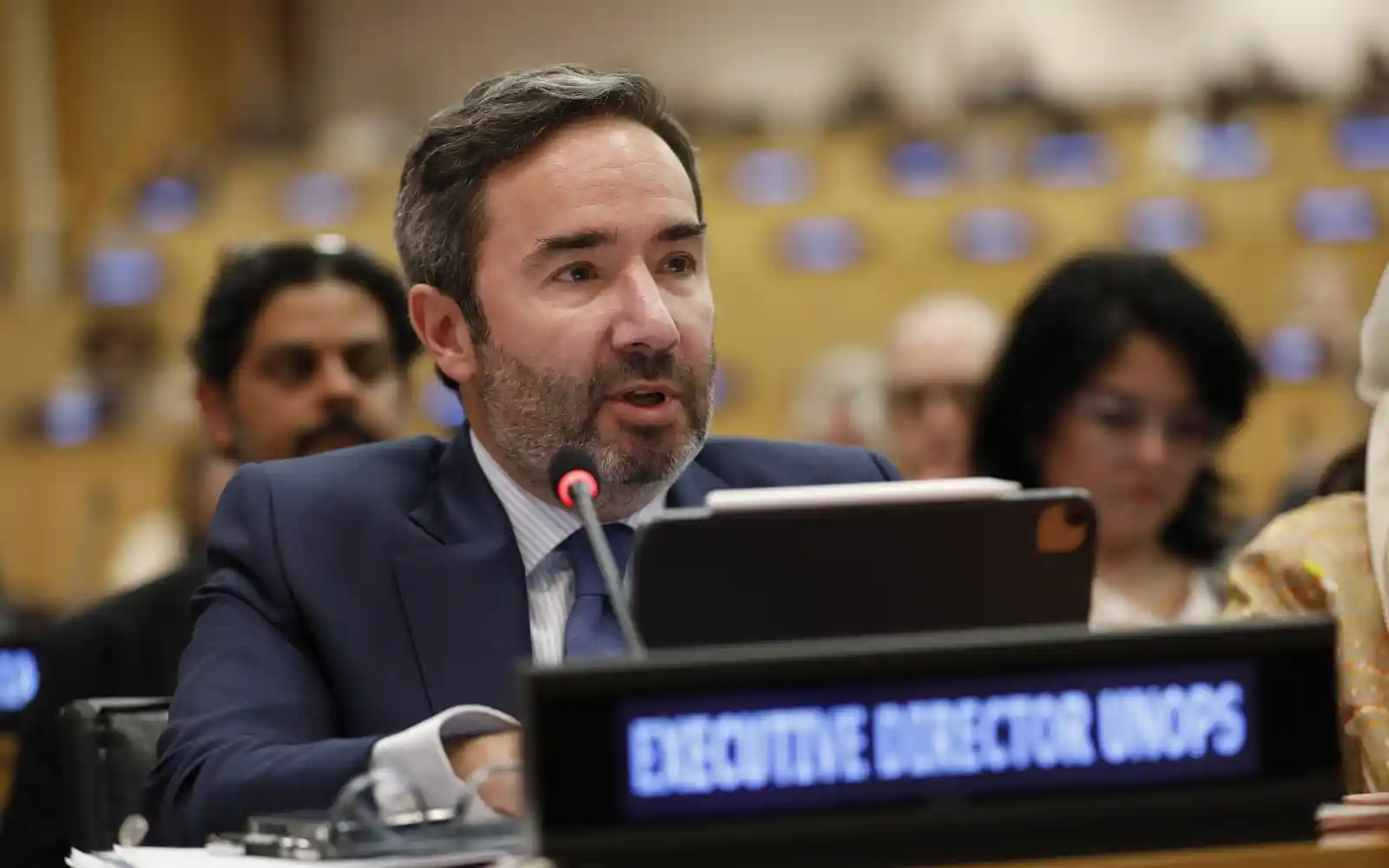
Statement by Jorge Moreira da Silva, UN Under-Secretary-General and UNOPS Executive Director, at the Joint Meeting of the Executive Boards of UNDP/UNFPA/UNOPS, UNICEF, UN Women and WFP – New York, 5 June
[Check against delivery]
Excellencies, Distinguished Delegates, and Colleagues,
I am pleased to join fellow Executive Heads here today to jointly explore strategic considerations and system-wide perspectives regarding UN80.
UNOPS is fully committed to the UN80 Initiative. We firmly believe that the UN is greater than the sum of our parts, and UNOPS is dedicated to ensuring that our collective impact matches the scale and urgency of today’s global challenges.
These challenges do not exist in silos. UNOPS operates across sustainable development, humanitarian action, and peace and security. We deploy our expertise in some of the world’s most complex and fragile environments.
Based on this experience, let me pose a fundamental question that cuts across many of the UN80 work packages. We all want a collaborative, coordinated, coherent UN system operating at scale. We all maintain mandates should be preserved. We all admit that there is probably some redundancy in the system. But I would like to argue that the solution is neither to foster additional competition nor to create monopoly powers and structures, or to rest on incumbents. I still fundamentally believe that whilst sticking to mandates, we need to compatibilize a boost on collaboration with a market-place to enhance efficiency, agility, and effectiveness. Nobody should be afraid of a marketplace.
Allow me to illustrate this point with three examples:
- UNCT reconfiguration
- Unified Services Roadmap, and
- Integrating supply chains
Over the past months, I have had the privilege to coordinate efforts behind the reconfiguration of UN Country Teams - under the leadership of the Deputy Secretary-General - to ensure we collectively and progressively plan strategically, deliver according to need, adapt to different environments, and we have fit for purpose operating models and instruments.
What I heard a lot in this process was how can we have the ambition to
streamline country presence, without reducing our effectiveness or impact. My response has been that, on the contrary, the Resident Coordinator should be well positioned to strategically plan (together with the host country and the UNCT) for necessary skills and expertise - aligned with individual mandates - through the Cooperation Framework.
But this is not a static question of having everyone present everywhere to maintain visibility and funding, but a more dynamic question of deploying relevant expertise, on demand, where and when needed from outside the country. This is the embodiment, for example, of how UNOPS itself operates with agility and low fees.
For this system to work, introducing robust transparency standards will be critical to strengthening trust, enabling accountability, and ensuring compliance.
Second, since 2024, UNOPS has been co-chairing the UNSDG Business Innovations Group alongside UNFPA. Building on this momentum, UNOPS now co-leads UN80 Work Package 14 "Unified Services Roadmap".
This is a major, transformative effort to maximize operational efficiencies across the UN system. By eliminating duplication, we ensure that more resources go directly to where they have the greatest impact.
To maximize operational efficiency, we must transition away from support services fragmented on an entity-by-entity basis. UN80 provides a historic window to achieve this. The establishment of Common Back Offices requires sustained behavioral change - championed at the highest level by entity Principals - to shift organizational dynamics away from an 'opt-out' mindset and toward systemic buy-in.
But this is not the same as saying we need incumbents or monopoly status for certain entities to provide shared services. We each have different competitive advantages, and we each need to both buy and sell in this space, in line with mandates, with genuine market dynamics. This is what will drive genuine efficiency and generate savings.
I believe the same applies to integration of supply chains.
UNOPS is fully committed to supporting joint delivery and stands ready to integrate our agile procurement models and digital platforms - such as Web Buy - into early-stage logistics planning in complex and priority contexts.
To achieve the UN80 vision of faster, more cost-efficient delivery, we must leverage the specialised operational capabilities of the entire UN system based on where and how they can best add value - complementing the vital work of traditional humanitarian responders, for example.
And, again, key is transparency. Strategic decisions should be rooted in
transparent data and rigorous cost benefit analysis.
Chair, Excellencies,
You will often hear me and my colleagues speak about agility. I genuinely believe that we will not confront the challenges of today, with the resource crunch we simultaneously face, without thinking more horizontally and less vertically. We need new ways of working which can drive efficiency but also effectiveness, coherence but also impact. And I think this and a more agile UN would go a long way to re-building trust.
Thank you.