


The United Nations Office for Project Services (UNOPS)
FOR IMMEDIATE RELEASE | 8 June 2026
Re-use and management of rubble fundamental to communities’ recovery and restoring of shattered basic services
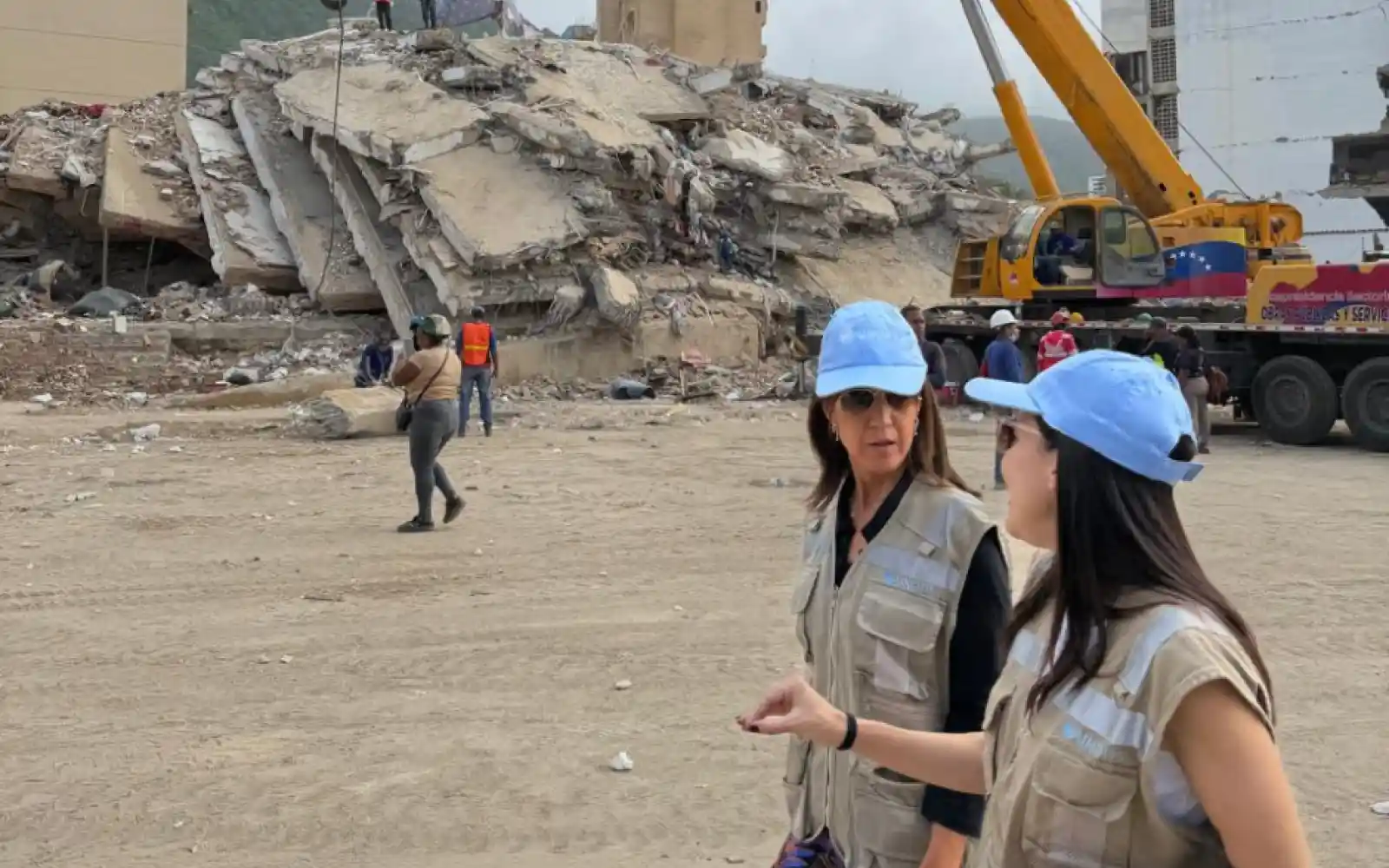
COPENHAGEN, 9 JUNE 2026 | As conflicts and climate-related natural disasters increase globally, millions of tonnes of debris are generated every year. Without effective management, this debris can delay recovery, increase costs and prolong the suffering of affected people.
- In the Gaza Strip there are more than 60 million tonnes of rubble: the capacity of nearly 3,000 container ships. On average every person in Gaza today is surrounded by 30 tonnes of rubble.
- In 2024, conflict in Lebanon generated 14.5 million metric tonnes, while the 2023 Türkiye-Syria earthquake generated approximately 210 million metric tonnes.
A UNOPS report just out provides practical solutions to reuse rubble and accelerate recovery and reconstruction efforts for the affected communities.
While rubble overwhelms local systems, damages ecosystems and generates greenhouse gas emissions, it is not mere waste. The report highlights how to reuse and manage rubble after disasters and conflicts.
“By transforming rubble from waste into a resource, we can accelerate the recovery of communities,” said Jorge Moreira da Silva, UNOPS Executive Director. “UNOPS offers practical solutions to help use rubble as a fundamental resource to support reconstruction including restoring shattered basic services like water, education and health facilities .”
Reusing rubble can support recovery efforts, reduce environmental impacts and create economic opportunities for affected communities. It can also offer substantial cost savings, by reducing the need to invest in expensive, hard to source raw materials to rebuild.
The report highlights that while recycling rubble can initially cost more than sending to landfill, the value generated over time significantly offsets those costs.
It identifies key operational challenges limiting sustainable rubble management and provides practical solutions for governments, local authorities, financiers and other implementers to address them.
ENDS-
Notes to the editors
- 'From rubble to resource: Guidance for people-centred circular rubble management and reconstruction’, UNOPS published this report with contributions from the UN Environment Programme (UNEP), the UN Human Settlements Programme (UN-Habitat), the International Labour Organization (ILO), the UN Development Programme (UNDP), Habitat for Humanity, the World Wildlife Fund (WWF), RMIT University and the KTH Royal Institute of Technology.
- Read the full report here (PDF).
Key figures from the report:
- Recycling rubble may initially cost 27 per cent more than landfill disposal. But revenue from recycled materials makes it 18–48 per cent cheaper.
- When you include the avoided costs of having to purchase new raw materials, recycling of rubble can be up to 49 per cent cheaper than disposal and repurchase combined.
- The built environment accounts for roughly 31 per cent of global material consumption, annually using 4.2 billion tonnes of concrete, 2.2 billion tonnes of fired clay bricks, and 1.7 billion tonnes of steel.
- Producing raw materials for construction accounts for approximately 15 per cent of global greenhouse gas emissions. The construction sector uses 15 per cent of global freshwater.
- A single disaster or conflict can overwhelm local solid waste management systems with rubble equalling five to 15 times a community's annual solid waste.
- At least 80 per cent of structures across the Gaza Strip have been destroyed or heavily damaged, leaving an estimated 68 million metric tonnes of debris.
- In 2024, conflict in Lebanon generated 14.5 million metric tonnes, while the 2023 Türkiye-Syria earthquake generated approximately 210 million metric tonnes.
- All together, the debris produced from just these three crises is equivalent to the entire annual municipal solid waste generated in Central and South Asia.
About UNOPS:
UNOPS offers practical solutions across peace and security, humanitarian and development operations. We help the United Nations, governments and other partners, to manage projects, and deliver sustainable infrastructure and procurement across the world.